Overview
A career shaped by discipline, modernist conviction and an unusually broad sense of musical history.
The canon without nostalgia
Pollini approached Beethoven, Schubert, Chopin and Schumann as living structures rather than monuments. He respected stylistic inheritance, but his performances avoided sentimental historicism. Clarity, proportional control and exact rhythm gave the music a contemporary urgency.
A modernist at the center of the mainstream
Few pianists of comparable international fame devoted such sustained attention to Schoenberg, Webern, Boulez, Stockhausen, Manzoni and Nono. For Pollini, contemporary music was not an occasional obligation but part of a continuous history extending from Bach and Beethoven to the present.
The ethics of precision
His celebrated technical security was never simply athletic. Precision was an ethical and interpretive principle: a way of respecting complex notation, making polyphony audible and preventing virtuosity from becoming decorative display.
Extended biography
From an exceptionally cultivated Milanese childhood to one of the most rigorous international careers in modern piano history.
Maurizio Pollini was born in Milan on 5 January 1942 into a highly cultured family. His father, Gino Pollini, was a prominent rationalist architect, while his mother was a pianist and singer; the visual arts, literature and music were therefore part of his environment from childhood. He studied first with Carlo Lonati and later with Carlo Vidusso at the Milan Conservatory. His development was unusually rapid, but it was never merely that of a prodigy trained for public effect. From an early stage he showed a fascination with the architecture of a score: how voices are layered, how harmony accumulates tension, and how a large movement can be made intelligible without rhetorical distortion.
His victory at the International Chopin Piano Competition in Warsaw in 1960, at the age of eighteen, immediately placed him among the most discussed young pianists in Europe. Arthur Rubinstein, who served on the jury, was among those who recognized the extraordinary maturity of his playing. Yet Pollini did not respond to the victory by rushing into a relentless virtuoso career. He withdrew for a period of further study and reflection, including work with Arturo Benedetti Michelangeli. This decision became emblematic of his temperament: success was not an end in itself, and technical brilliance had to be subordinated to a fully considered artistic identity.
During the 1960s and 1970s Pollini established a distinctive international profile. Chopin remained central, but Beethoven, Schumann, Schubert and Brahms became equally important, while his commitment to the Second Viennese School and post-war modernism set him apart from most star pianists. His engagement with Luigi Nono was especially significant. Pollini shared with Nono, Claudio Abbado and other Italian artists a belief that contemporary culture could not be separated from political and social consciousness. Concert programs could therefore become arguments: Beethoven beside Schoenberg, Chopin beside Boulez, inherited tradition beside radical modernism.
The partnership with Deutsche Grammophon became one of the defining recording relationships of the late twentieth century. Across more than five decades Pollini recorded a vast repertory, often revisiting major works at different moments in his life. His Beethoven sonata cycle, the Chopin études and late works, Schumann, Schubert, Brahms and the modernists form a discography of exceptional coherence. The engineering often emphasized the directness and concentration of his sound, but the recordings also reveal important changes: early brilliance gradually became broader, darker and more rhetorical, without losing the underlying insistence on structure.
Pollini was sometimes criticized for emotional reserve. The criticism is understandable if one expects interpretation to announce feeling through flexible surface gesture. But his expressive method was different. Emotion often arises through the pressure of harmonic sequence, the accumulation of rhythm and the precise weighting of voices. In the late Beethoven sonatas, for example, transcendence is not added from outside; it emerges from the relation between fugue, recitative, silence and variation. In Chopin, rubato is present but integrated into pulse. In Schumann, turbulence is intensified by clarity rather than blurred by it. The result can feel severe, yet the severity is part of the emotional world.
In the 1990s he created the “Progetto Pollini,” a series of concert programs designed to place canonical and contemporary works within a single intellectual horizon. This curatorial activity revealed how he understood his own role: not simply as a pianist who mastered difficult repertoire, but as a musician responsible for shaping listening culture. He continued performing into old age, even as health problems sometimes affected appearances. He died in Milan on 23 March 2024. His legacy is unusually complete: a model of technical integrity, a vast recorded archive and a conviction that the history of music remains unfinished as long as performers continue to connect past masterpieces with the language of their own time.
Career
Major phases in a career that deliberately resisted the conventional rhythm of virtuoso celebrity.
Repertoire
The repertoire was wide, but several composers reveal especially clearly the logic of Pollini’s musicianship.
Chopin
Pollini’s 1960 competition victory began a lifelong relationship with Chopin. His études combine near-absolute technical control with an unsentimental understanding of line and harmony; later recordings of the nocturnes, ballades and late works show increasing breadth and darkness.
Beethoven
Beethoven suited Pollini’s concern with architecture and dialectical tension. The sonatas, especially the middle and late works, reveal his ability to make formal logic audible without reducing the music to abstraction.
Schumann
In the Fantasy, Davidsbündlertänze, Kreisleriana and other works he brought exceptional clarity to music often treated as fragmentary or impulsive. The psychological volatility remains, but the structure underneath becomes unmistakable.
Schubert and Brahms
His Schubert can be stark and spacious, emphasizing harmonic distance and the unsettling scale of late forms. Brahms draws on his power of inner-voice projection and control of dense textures.
Schoenberg and the Second Viennese School
Pollini treated Schoenberg not as difficult specialist repertoire but as central European music. His recordings of the piano works are models of rhythmic exactness, color and structural comprehension.
Boulez, Stockhausen and Nono
Post-war modernism was essential to his artistic identity. These scores benefited from his exceptional rhythmic discipline, dynamic range and refusal to soften their radical language for easy consumption.
Interpretive style
Pollini’s style changed over six decades, but several constants remained unmistakable.
Control without decorative virtuosity
His technique was among the most secure of his generation, yet the effect rarely centered on display. Fast passagework, repeated notes and dense chords were organized so that the musical argument remained more important than the difficulty.
Structure as expression
Large-scale proportion was a primary expressive resource. Climaxes gain force because they have been prepared across long spans; quiet passages matter because their harmonic function remains clear.
Rhythmic integrity
Even when local flexibility is present, the pulse remains intelligible. This gives his Chopin unusual continuity and his modernist repertoire a compelling sense of inevitability.
A changing late style
Later Pollini could be broader, more exposed and sometimes less technically immaculate than in youth. Yet the best late performances reveal greater rhetorical freedom, darker sonority and a willingness to let the music’s fragility become audible.
Technique, practice & influence
Technique, score study and programming formed a single intellectual discipline.
Score-centered preparation
Pollini’s performances suggest exhaustive attention to notation, voice-leading and formal relation. The score was not a cage but the source from which expressive freedom could be earned.
Modernism as training
Playing Boulez or Stockhausen sharpened resources—rhythmic precision, layered dynamics, attack variety—that also transformed his reading of older music.
Programming as interpretation
By placing Beethoven, Schoenberg, Chopin and Nono within shared programs, Pollini argued that interpretation includes the way works are contextualized for an audience.
Recordings & audio legacy
The discography is one of the most coherent large-scale documents left by any pianist of his generation.
Chopin: Études
A benchmark of technical authority and structural clarity, admired for its refusal of empty virtuoso rhetoric.
Beethoven: Piano Sonatas
A long-term project tracing the development of his Beethoven across decades, from youthful steel to mature breadth.
Schumann: Fantasy, Kreisleriana and major cycles
Recordings that combine analytical transparency with powerful psychological pressure.
Schubert: late sonatas
Spacious, serious readings attentive to harmonic distance, silence and large-scale architecture.
Schoenberg · Boulez · Stockhausen
Essential documents of Pollini’s belief that twentieth-century modernism belonged at the center of concert culture.
Concert recordings and final decades
These reveal greater variability than the studio legacy and are crucial for understanding the evolution of his late style.
Documents & sources
Reference points for biography, discography and the historical context of his artistic choices.
Deutsche Grammophon
Artist biography and extensive discographic documentation for Pollini’s long relationship with the label.
International Chopin Piano Competition
Historical context for the 1960 Warsaw victory that launched Pollini’s international reputation.
Image documentation
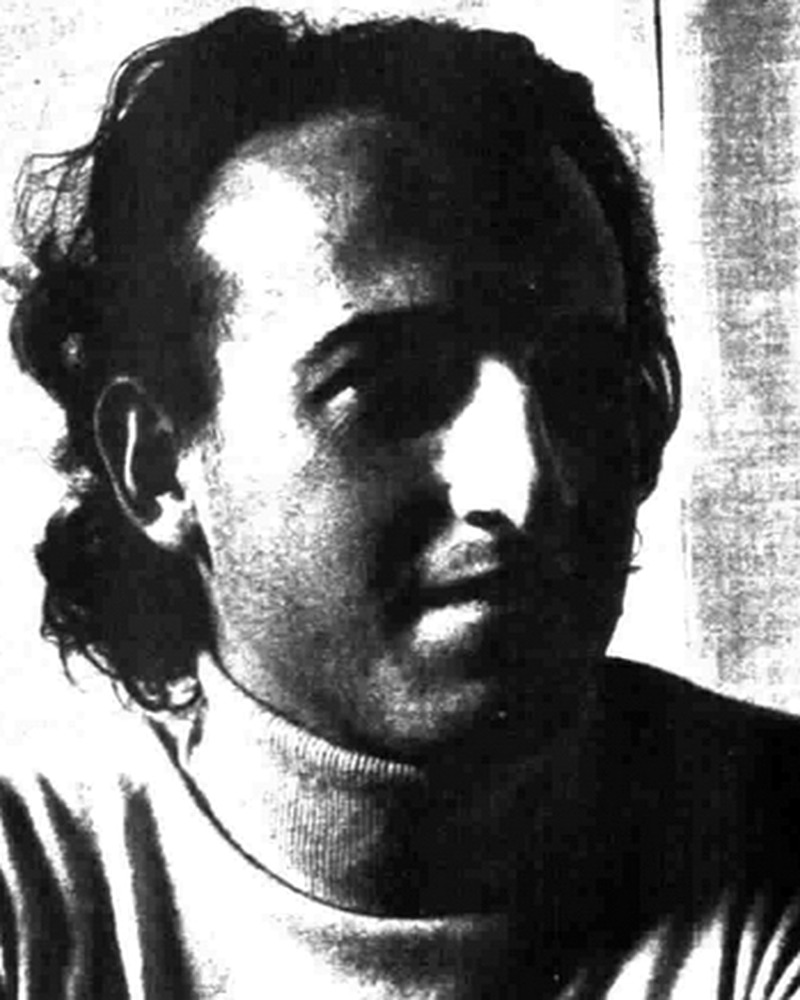
The profile portrait is stored locally in the plugin. Historical source documentation is retained separately so the website does not depend on external image delivery.
Research & legacy
Pollini rewards research that compares repertory, recording periods and programming rather than reducing him to the stereotype of a “cool” pianist.
Compare early and late Pollini
The contrast between the youthful Chopin recordings and the broader late Beethoven or Chopin documents reveals a substantial evolution in touch, tempo and rhetoric.
Study the programs, not only the discs
Progetto Pollini and other curated series show how strongly he believed programming itself could create historical and intellectual meaning.
Pollini, Abbado and Nono
The artistic network around post-war Italian modernism provides essential context for understanding his political and aesthetic seriousness.
Chronology
Selected milestones in a career spanning more than six decades.
Born in Milan on 5 January.
Studies with Carlo Lonati and Carlo Vidusso; emerges as an exceptional young pianist.
Wins first prize at the International Chopin Piano Competition in Warsaw.
Continues intensive study and gradually establishes an international concert career.
Begins the long recording association with Deutsche Grammophon that will define much of his discography.
Becomes a major advocate of Schoenberg, Boulez, Stockhausen and Nono alongside the classical-romantic canon.
Develops Progetto Pollini, linking old and new music in carefully designed concert series.
Continues major Beethoven, Chopin and Schubert projects while remaining active internationally.
Performs selectively as health permits, retaining his status as an elder statesman of modern pianism.
Dies in Milan on 23 March.