Overview
Artistic identity and historical position.
Electric communication
Horowitz possessed an almost unmatched ability to alter the emotional temperature of a hall. Sudden dynamic shifts, unexpected timing and a vast palette of attack made audiences feel that the performance was happening at the edge of possibility.
A colorist of extreme precision
The brilliance of his technique was tied to voicing. Chords could be reorganized so that a hidden inner line emerged; bass notes could detonate without thickening the texture; repeated notes and octaves remained clear at extraordinary speed. Color was therefore created by hierarchy, not simply by pedal.
The paradox of the legend
The public image suggested effortless certainty, but Horowitz was repeatedly beset by fear, depression and doubt about his playing. His withdrawals from the stage were real artistic crises. Each return produced a slightly different pianist, which makes his recordings unusually rich for comparative listening.
Biography
Formation, career and historical context.
Kyiv and the conservatory
Born in Kyiv in 1903 into a cultivated musical family, Horowitz received early instruction from his mother and later studied at the Kyiv Conservatory with teachers including Sergei Tarnowsky and Felix Blumenfeld. The revolutionary years were economically difficult, and the young pianist entered professional life quickly. By the early 1920s he was giving exhausting series of concerts across the Soviet Union, building an enormous repertoire at speed.
The move West
In 1925 Horowitz left the Soviet Union for Berlin, officially for study and performance, and did not return for more than sixty years. Success in Berlin was followed by sensational appearances in Hamburg, Paris and London. European audiences discovered not simply a fast pianist but a performer capable of enormous projection, sharply differentiated voices and thrilling risk. His American debut came in 1928 at Carnegie Hall with Tchaikovsky’s First Concerto.
Toscanini, America and withdrawal
Horowitz first performed with Arturo Toscanini in the 1930s and married Toscanini’s daughter Wanda in 1933. He settled permanently in the United States and became a citizen in 1944. Despite immense fame, his relationship with the stage became increasingly unstable. There were periods of withdrawal and return, culminating in the famous twelve-year absence from public recitals between 1953 and 1965.
The comeback and final transformation
The 1965 Carnegie Hall recital was one of the most publicized classical events of its era. Thereafter Horowitz performed selectively, withdrew again, and returned several times. In the 1980s he recovered a more intimate, transparent style and broadened his interest in Mozart. His 1986 return to Moscow carried immense symbolic weight. He remained active almost until his death in New York in 1989.
Career
Principal stages of an international career.
Repertoire
Composers and areas most closely associated with the artist.
Rachmaninoff and Scriabin
Horowitz had personal contact with Rachmaninoff and became a central advocate of his piano music. Scriabin likewise suited his extraordinary ear for color, harmonic instability and ecstatic climax. In both composers he could make extreme textures sound inevitable.
Chopin and Liszt
His Chopin combined aristocratic line with startling rhythmic freedom and technical volatility. Liszt allowed the full scale of his orchestral imagination, but Horowitz often chose pieces that gave space for fantasy and transcription rather than pursuing comprehensive cycles.
Schumann and Scarlatti
Schumann revealed the poetic and psychologically volatile Horowitz, especially in Kreisleriana and Kinderszenen. Scarlatti became one of his signatures: crisp articulation, improbable dynamic shading and a modern sense of keyboard color transformed short sonatas into miniature dramas.
Selective classics
He played Beethoven, Mozart and Brahms selectively rather than as complete cycles. This selectivity is important: Horowitz chose repertory according to personal identification, and his strongest performances often emerged where the music allowed individual color and dramatic timing.
Interpretive style
Sound, phrasing, rhythm and pianistic conception.
The illusion of limitless dynamics
Horowitz’s dynamic range was legendary, but the crucial point is control. His loud playing retained focus, while pianissimos could project in large halls. The extremes were connected by many intermediate colors rather than by simple contrast.
Voicing and keyboard orchestration
He redistributed chordal balance constantly. A melody might emerge from the middle of a dense texture, or a bass note could change the harmonic perspective of an entire phrase. This ability created the impression of multiple instrumental layers.
Freedom, intervention and risk
Horowitz did not treat the printed score as an untouchable artifact. He sometimes altered dynamics, textures or even notes, particularly in virtuoso repertory and his own transcriptions. Modern listeners may question these interventions, but they belong to a nineteenth-century performer tradition in which interpretation could include creative re-composition.
Technique & working method
Practice, pianistic resources and influence.
A private technical laboratory
Horowitz was not primarily a public pedagogue, but he continually reworked his own mechanism. Repeated withdrawals show that technique for him was never fixed. He experimented with touch, finger angle, seating and voicing in pursuit of specific colors.
Economy behind spectacle
Despite the explosive result, many observers noted the relative economy of his movements. Much of the effect came from highly differentiated finger control and timing rather than broad physical gestures.
Transcription as technical thought
His arrangements of Carmen, Stars and Stripes Forever, Liszt and other works reveal how he thought about pianistic distribution. They are not merely encores but maps of his technique: octave placement, repeated-note control, layered voicing and orchestral illusion.
Recordings
Essential documents for hearing development and legacy.
Tchaikovsky Concerto with Toscanini, 1943
The wartime performance is one of the canonical documents of virtuoso concerto playing: propulsion, massive climaxes and almost reckless confidence.
Carnegie Hall live recitals
The extensive Carnegie archive allows rare longitudinal study of one artist in the same hall across decades, revealing changes in repertory, risk and tone.
1965 comeback recital
A historic return after twelve years away from public recitals. The performance combines nervous tension, poetic concentration and the unmistakable Horowitz sound.
Rachmaninoff and Scriabin
Studio and live recordings of these composers remain benchmarks for color, volatility and command of dense late-Romantic textures.
Horowitz in Moscow, 1986
The emotional weight of the return is inseparable from the music. The recital also shows the late Horowitz at his most direct and communicative.
Late Mozart and Schubert
The final years brought a softer, more transparent palette. These performances complicate the stereotype of Horowitz as merely a demonic virtuoso.
Documents & sources
Institutions and source material for deeper research.
Carnegie Hall Archives
Performance history and archival material documenting Horowitz’s close association with Carnegie Hall from 1928 through 1986.
https://www.carnegiehall.org/About/History/Carnegie-Hall-Icons/Vladimir-Horowitz
Library of Congress
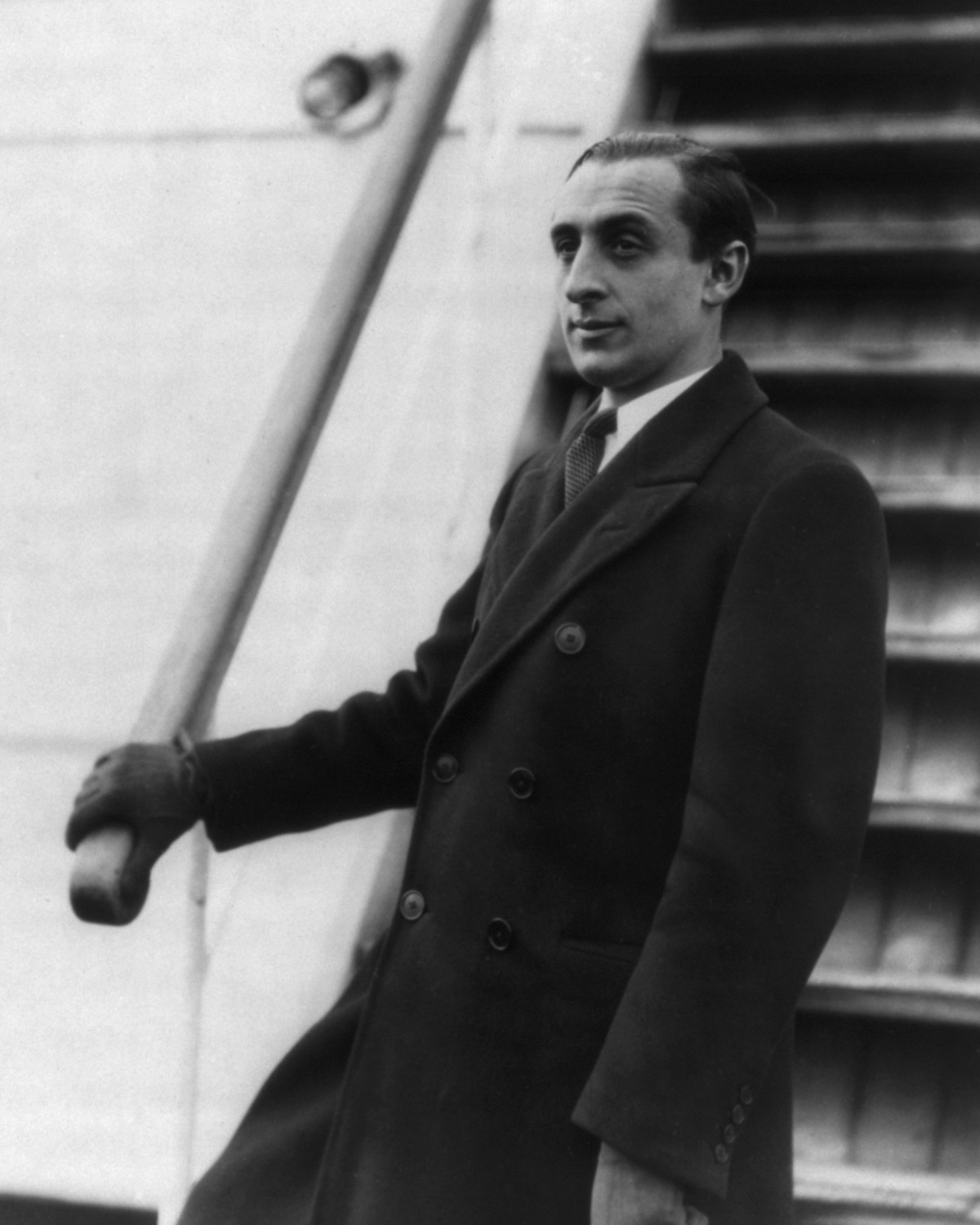
Historical Bain Collection photograph and catalog record with no known restrictions on publication, used as the source for the locally stored portrait.
Recording Academy / GRAMMY
Award history and concise career documentation useful for tracing the extraordinary scale of Horowitz’s recorded reception.
Books & research
Bibliography and recommended directions for study.
Glenn Plaskin — Horowitz: A Biography
A detailed biography rich in interviews and personal material, important for understanding the private complexity behind the public legend, though individual claims should be read critically.
Harold C. Schonberg — Horowitz: His Life and Music
A pianist-centered account by a major critic, particularly useful for repertory, style and historical reception.
Concertography and recordings as primary evidence
Because Horowitz changed so much across repeated comebacks, a chronological listening approach is especially valuable. Live documents often reveal more risk and spontaneity than the studio records.
Chronology
Major biographical and professional milestones.
Born in Kyiv on 1 October.
Graduates from the Kyiv Conservatory and begins intensive Soviet concert activity.
Leaves the Soviet Union and launches his Western European career.
Makes his American debut at Carnegie Hall in Tchaikovsky’s First Piano Concerto.
Begins major collaborations with Arturo Toscanini and marries Wanda Toscanini.
Becomes a United States citizen.
Withdraws from public recitals, beginning a twelve-year absence.
Returns triumphantly at Carnegie Hall.
Appears in a nationally televised Carnegie Hall concert.
Returns to Moscow for a historic recital after more than sixty years away.
Continues selective concerts and late recordings in Europe and the United States.
Dies in New York on 5 November.