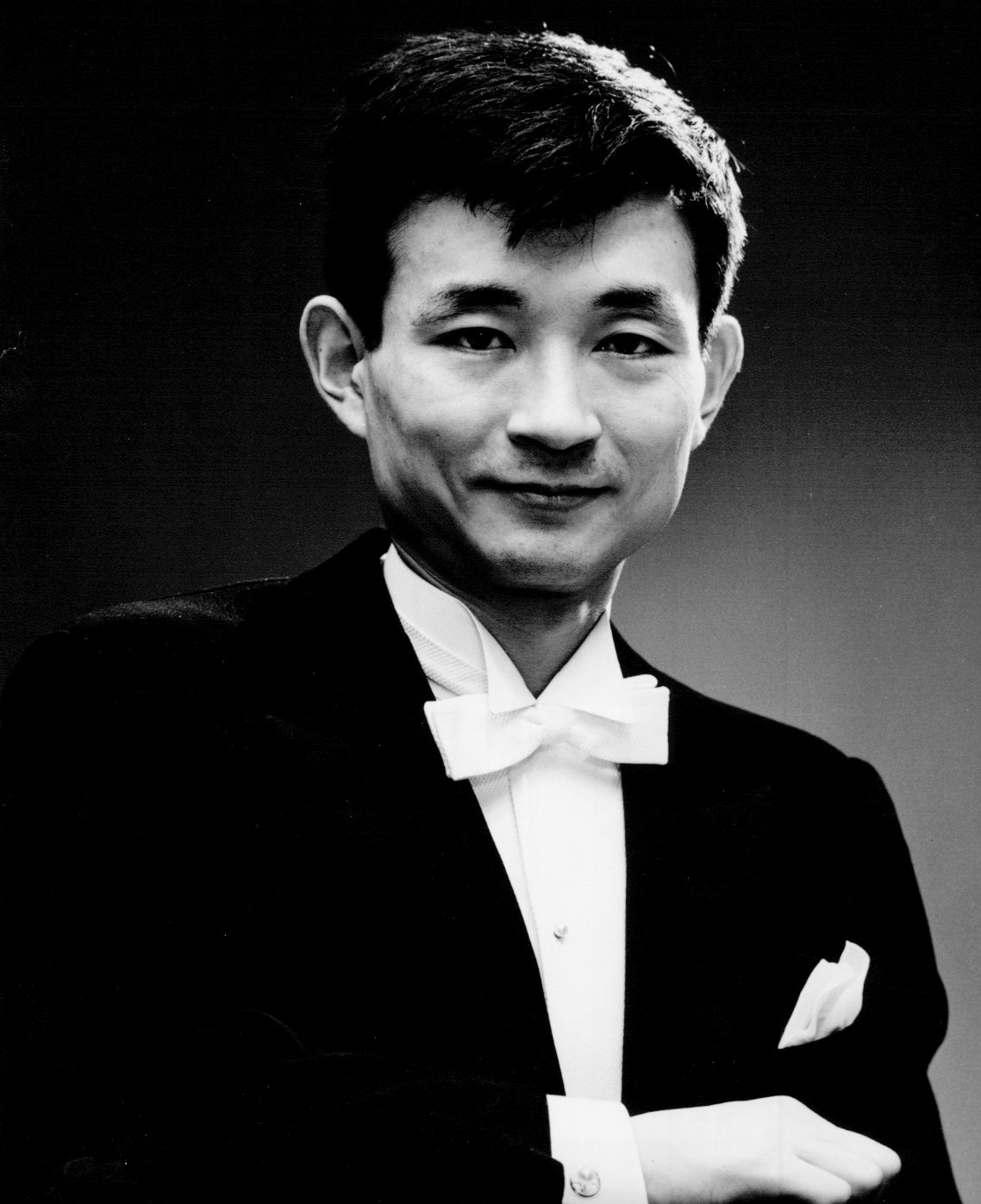
Overview
A concise map of the artistic identity
Ozawa
Seiji Ozawa became one of the first Asian conductors to hold sustained leadership positions at the highest level of Western orchestral life. His twenty-nine seasons with the Boston Symphony Orchestra made him the longest-serving music director in the orchestra’s history, while his work in Japan through the Saito Kinen Orchestra and the Matsumoto Festival created a parallel legacy of education, chamber discipline and international exchange. Ozawa’s repertory ranged from Berlioz, Ravel and Stravinsky to Mahler, Messiaen, Takemitsu and contemporary commissions, and his conducting was marked by physical fluency, coloristic sensitivity and a strong theatrical instinct.
Biography
Expanded life and career narrative
From Manchuria to postwar Japan
Ozawa was born on 1 September 1935 in Shenyang, then Mukden, to Japanese parents. His childhood unfolded amid war, displacement and the reconstruction of Japanese cultural life after 1945. He first studied piano and intended to become a pianist, but an injury to his fingers redirected him toward conducting. At the Toho School of Music he studied with Hideo Saito, whose exacting approach to score study, rhythm and ensemble discipline became foundational. Ozawa’s formation was therefore both intensely Japanese and consciously international: he absorbed a pedagogical tradition built around European repertory while seeking a path beyond the limitations of postwar musical isolation.
Besançon, Tanglewood, Karajan and Bernstein
In 1959 Ozawa won the Besançon International Competition for Young Conductors, a decisive breakthrough. Charles Munch invited him to Tanglewood, where he won the Koussevitzky Prize and entered the orbit of the Boston Symphony. Further study and apprenticeship followed with Herbert von Karajan in Berlin and Leonard Bernstein in New York. Those encounters placed Ozawa at the intersection of contrasting conducting cultures: Karajan’s cultivated orchestral sonority, Bernstein’s theatrical immediacy and Munch’s French transparency. Rather than imitate any one of them, Ozawa gradually forged an agile, visual conducting language of his own.
North American leadership and the Boston era
Ozawa’s early appointments included the Toronto Symphony, the Ravinia Festival of the Chicago Symphony and, from 1970, the San Francisco Symphony. In 1973 he became music director of the Boston Symphony Orchestra, succeeding William Steinberg. Over twenty-nine seasons he led the orchestra through a global expansion in touring, recording and commissioning. The BSO under Ozawa travelled widely, including the historically important 1979 tour of mainland China, and cultivated contemporary composers such as Henri Dutilleux, Olivier Messiaen, Toru Takemitsu and Peter Lieberson. His Boston years also strengthened Tanglewood as an educational centre and gave the orchestra a highly visible international profile.
Japan, Vienna and the late legacy
Ozawa never allowed his American success to detach him from Japan. The Saito Kinen Orchestra, founded in 1984 in memory of Hideo Saito, brought together elite Japanese and international musicians and eventually became the artistic core of the Matsumoto festival. In 2002 Ozawa moved into a more explicitly operatic phase as music director of the Vienna State Opera, where Mozart, Strauss and major repertory operas became central. Serious health problems reduced his activity after 2010, but he continued selected appearances and educational work. He died in Tokyo on 6 February 2024, leaving a legacy that linked Boston, Tanglewood, Vienna and Japan in an unusually global musical biography.
Career
Major institutional milestones
Repertoire
Core composers and traditions
French repertoire
Berlioz, Debussy, Ravel and Messiaen suited Ozawa’s ear for color, transparency and large-scale orchestral atmosphere.
Russian and twentieth century
Stravinsky, Prokofiev, Shostakovich and modern scores were recurrent pillars of his international repertory.
Mahler and late Romanticism
Mahler became central in Boston and Japan, often revealing Ozawa’s capacity for long spans and extreme contrasts.
Takemitsu and contemporary music
Ozawa was a major advocate for Toru Takemitsu and supported commissions that connected the BSO to late-twentieth-century composition.
Opera
Mozart, Strauss and major repertory opera became increasingly important, culminating in his Vienna State Opera tenure.
Japanese musical institutions
His most lasting non-European contribution may be institutional: Saito Kinen and Matsumoto created durable structures for elite training and performance.
Style & interpretation
Audible traits and interpretive principles
Physical fluency
Ozawa’s conducting was unusually mobile and expressive, using the whole body to shape attack, line and orchestral color.
Color and atmosphere
He was particularly effective in scores where timbre, spatial balance and changing orchestral density are structurally important.
Theatrical momentum
Even in symphonic repertory, Ozawa often approached transitions dramatically, sustaining narrative direction rather than treating movements as static blocks.
Rehearsal method
How the result is built in rehearsal
Score-led precision
His Hideo Saito training encouraged rigorous preparation, clean ensemble and detailed rhythmic coordination.
Flexible communication
Ozawa could combine precise technical instruction with a comparatively open, non-dogmatic rehearsal manner.
Education as practice
Tanglewood and Saito Kinen show that teaching was not peripheral to his career but an extension of his rehearsal philosophy.
Opera & theatre
Theatre, singers and dramatic pacing
Vienna State Opera
His 2002–2010 music directorship placed him at the centre of European opera after decades dominated by symphonic posts.
Dramatic instinct
Mozart and Strauss benefited from his alert pacing, sensitivity to singers and strong sense of theatrical continuity.
Recordings & broadcast legacy
Essential documents for studying the legacy
Berlioz
Major Boston recordings helped define Ozawa’s international reputation for French orchestral color.
Messiaen
His recordings of large-scale Messiaen works remain important documents of modern orchestral performance.
Mahler
Boston and Japanese recordings trace an evolving, highly personal engagement with the symphonies.
Takemitsu
Ozawa’s advocacy preserved a crucial performance relationship with one of Japan’s most important modern composers.
Boston archive
The BSO’s broadcast and recorded legacy documents nearly three decades of programming and touring.
Saito Kinen
Later recordings reveal a chamber-like responsiveness in an orchestra assembled from elite international players.
Images, scores & documents
Institutional sources and image provenance
Boston Symphony Orchestra
Official timeline, music-director history and memorial documentation.
Boston Symphony Orchestra
Seiji Ozawa Matsumoto Festival
Official biography and institutional history.
Seiji Ozawa Matsumoto Festival
Wikimedia Commons
1963 portrait by Don Hunstein; public-domain status in the United States documented on Commons.
Wikimedia Commons
Books & research
Bibliography and research directions
Seiji Ozawa with Haruki Murakami — Absolutely on Music
Extended conversations on conducting, listening, repertoire and musical memory.
BSO / Tanglewood archives
Programs, tours, commissions and broadcasts provide a primary institutional record of the Boston years.
Research priorities
Compare Ozawa’s French, Mahler and contemporary repertory across Boston, Saito Kinen and Vienna to distinguish institutional sound from personal style.
Chronology
Major milestones
Born in Shenyang, 1 September.
Wins the Besançon conducting competition.
Studies at Tanglewood and wins the Koussevitzky Prize.
Works with Karajan and Bernstein.
Becomes music director in Toronto.
Begins San Francisco Symphony music directorship.
Becomes Boston Symphony music director.
Leads historic BSO tour of mainland China.
Saito Kinen Orchestra founded.
Saito Kinen Festival begins in Matsumoto.
Ends Boston tenure; begins Vienna State Opera leadership.
Health problems sharply reduce activity.
Dies in Tokyo, 6 February.