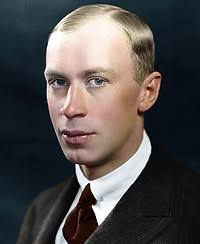
Overview
Prokofiev’s art joins modernist energy, classical clarity and a strongly personal dramatic instinct that remained recognizable through all phases of his career.
A twentieth-century classic with many voices
Sergei Prokofiev was born at Sontsovka in the Ukrainian region of the Russian Empire on 23 April 1891 (11 April old style) and died in Moscow on 5 March 1953. He emerged before the First World War as a formidable pianist-composer, spent many years abroad after the Revolution, and returned permanently to the Soviet Union in 1936. This biographical arc gave his music an unusual combination of cosmopolitan modernism and intense engagement with Soviet cultural life.
Prokofiev himself spoke of several “lines” in his style: a classical line, an innovative or modern line, a toccata-like motor line, a lyrical line and a grotesque line. These categories are not rigid, but they help explain how such diverse works can nonetheless sound unmistakably like Prokofiev. The Second and Third Piano Concertos, the Classical Symphony, the ballets Romeo and Juliet and Cinderella, the opera The Love for Three Oranges, the cantata Alexander Nevsky, the Fifth Symphony and Peter and the Wolf all reveal different balances of these stylistic tendencies.
Modern scholarship has increasingly emphasized the complexity of Prokofiev’s Soviet years. The old image of a straightforward return “home” has given way to a more intricate picture involving negotiation, compromise, ambition, censorship, revision, political pressure and remarkable resilience. The result is a body of work whose historical context is inseparable from its musical character.
Essential dimensions
Biography
Prokofiev’s life joins prodigious early talent, international travel, exile, return, official favour, repression and sustained creative productivity.
Childhood, St Petersburg and the years abroad, 1891–1936
Prokofiev showed exceptional ability very early. His mother fostered his training, and as a child he composed piano pieces and even attempted operas. He entered the St Petersburg Conservatory in 1904, where he studied with teachers including Rimsky-Korsakov, Anatoly Lyadov and Nikolai Tcherepnin. Already in these years he projected an image of youthful audacity, reflected in the sarcastic and percussive edge of early piano works and concertos.
After the Revolution Prokofiev left Russia, travelling first to the United States and then spending much of the 1920s and early 1930s in Europe, especially Paris. He worked with Serge Diaghilev, who became crucial to the creation of ballets such as Chout, Le pas d’acier and The Prodigal Son. During these years Prokofiev also composed major concert works, including the Third Piano Concerto, the Second and Third Symphonies, and the opera The Fiery Angel, while building an international profile as both composer and pianist.
The decision to return permanently to the Soviet Union was gradual rather than instantaneous. By the early 1930s Prokofiev had already been making frequent visits and receiving commissions. The move was shaped by artistic opportunity, family concerns, Soviet cultural outreach and perhaps a belief that stable conditions for large projects might be more attainable there than in the increasingly uncertain West.
Return to the Soviet Union and the final years, 1936–1953
The Soviet years produced some of Prokofiev’s best-known works: Romeo and Juliet, Peter and the Wolf, Alexander Nevsky, the “War Sonatas,” Cinderella, the Fifth Symphony and the opera War and Peace. Yet they were also marked by severe pressure. Prokofiev had to navigate state expectations, wartime dislocation, official criticism and the general uncertainties of cultural life under Stalin.
The Zhdanov decree of 1948, condemning leading Soviet composers for “formalism,” damaged Prokofiev materially and psychologically. His health was already poor, and his personal life was complicated by the arrest of his first wife Lina Prokofiev. Nevertheless the late years still yielded remarkable music, including the Sixth and Seventh Symphonies, the cello works written with Mstislav Rostropovich, revisions to earlier projects and significant film collaborations with Sergei Eisenstein on Ivan the Terrible.
Prokofiev died in Moscow on 5 March 1953, the same day as Stalin, a coincidence that long overshadowed the public notice of his death. Today he stands not merely as a major Soviet composer but as one of the central creative figures of twentieth-century music as a whole.
Works
Prokofiev’s catalogue is exceptionally broad and resists reduction to a single style or genre.
Symphonies, concertos and piano works
- The Classical Symphony, Symphonies Nos. 2–7, the five piano concertos, the violin concertos and the piano sonatas—especially the so-called War Sonatas Nos. 6–8—form a major central repertory of the twentieth century.
Ballet and stage works
- Romeo and Juliet, Cinderella, The Stone Flower, Chout, The Prodigal Son, The Love for Three Oranges, The Fiery Angel, Betrothal in a Monastery and War and Peace demonstrate his extraordinary dramatic range.
Film, cantata and children’s music
- Alexander Nevsky, Lieutenant Kijé, Ivan the Terrible, the cantatas, songs, chamber music and Peter and the Wolf are essential to understanding his public style, narrative instinct and ability to write for widely different audiences.
Recordings
Prokofiev on record reflects both Soviet performance traditions and a broad international modern repertoire.
Composer as performer
Prokofiev’s own piano recordings are primary historical documents for tempo, articulation, sonority and the sharply profiled rhythm of his keyboard style.
Soviet traditions
Conductors, pianists and violinists formed in Soviet musical culture preserve an especially important line of interpretation in the symphonies, concertos, ballets and sonatas.
Versions and revisions
Many works exist in multiple states. Recordings should identify which version is used, whether a reconstruction is involved and how editorial decisions shape the result.
Opera and ballet documentation
Because Prokofiev’s stage works are central to his output, filmed productions, complete performances and choreographic histories should stand alongside audio recordings in the archive.
What each recording entry should preserve
A Prokofiev recording entry should document work, version, performers, conductor, ensemble, date, label, catalogue number, source format and comments on editorial choices. In the case of ballets, operas and film scores, information on staging, arrangement or suite derivation is often essential.
Why versions matter
Prokofiev frequently revised works, sometimes under changing practical or political circumstances. A reliable archive must therefore distinguish between original conceptions, revised authorial versions and later editorial reconstructions.
Images & Documents
The documentary basis for Prokofiev studies includes diaries, manuscripts, letters, Soviet archival materials and major institutional collections.
Diaries and autobiographical writings
Prokofiev’s diaries are among the most important self-documentary records left by any twentieth-century composer.
Manuscripts and archives
Autograph materials, fair copies and publishing documents clarify chronology, revision and the complicated textual history of stage and orchestral works.
Institutional repositories
Important Prokofiev materials are held in Russian archives and in major Western research collections, including the Prokofiev Archive at Columbia University.
Political documentation
Soviet cultural decrees, committee papers and contemporary criticism are indispensable for understanding the context of the later works.
Core institutional resources
Serge Prokofiev Archive, Columbia University
Russian State Archive of Literature and Art (RGALI)
Museums and music libraries in Moscow and St Petersburg
These repositories are central for letters, manuscripts, diaries, programmes and reception materials.
Textual and historical issues
The interaction between authorial revision, Soviet censorship, practical adaptation and later reconstruction is central to Prokofiev studies. Documentary context often changes how a work is heard and even which notes are considered authoritative.
Books & Research
A serious Prokofiev bibliography should combine documentary biography, Soviet-context studies, thematic work analysis and primary materials.
Major reference books
Primary and specialist resources
Chronology
Key dates across Prokofiev’s career, from early training to the Soviet late years.
Born at Sontsovka on 23 April (11 April O.S.).
Enters the St Petersburg Conservatory.
Scandalous success of the Second Piano Concerto and rising avant-garde reputation.
Composes the Classical Symphony.
Leaves Russia for the United States.
Chicago premiere of The Love for Three Oranges.
Marries Lina Llubera; increasing European activity.
Important Soviet tour and renewed contacts.
Returns permanently to the Soviet Union.
Peter and the Wolf; work on Romeo and Juliet intensifies.
Film collaboration on Alexander Nevsky.
Composes the Fifth Symphony and continues work on War and Peace.
Targeted by the Zhdanov decree.
Completes the Seventh Symphony.
Dies in Moscow on 5 March.