Overview
Expanded performer-specific profile integrating biography, career, repertoire, interpretive style, technique, recordings, research and legacy.
Artistic identity
Voice, repertoire, institutions, recordings and reception are treated as one historical profile.
Performance history
Stage records and recordings distinguish reputation from directly documented practice.
Long-term legacy
Technique and interpretation are connected with later singers, recording culture and opera history.
Extended biography
Extended biography with historical, artistic and institutional context.
Price’s musical education combined church, piano and formal conservatory work before Juilliard. Florence Page Kimball helped develop a technique that preserved warmth while giving the upper register unusual freedom.
Porgy and Bess provided sustained stage experience and international exposure. The role of Bess also positioned Price within a changing American cultural landscape in which Black classical singers were increasingly breaking institutional barriers.
Before the Met she had already sung successfully in San Francisco, Vienna, London and Salzburg. Rudolf Bing heard her Leonora in Verona and offered a Met contract.
The 1961 debut with Franco Corelli became an immediate triumph. Price’s sound—velvety, glowing, focused and dynamically flexible—was unlike that of any colleague and quickly became associated with Verdi heroines.
Her repertoire centred on Aida, Leonora, Amelia and other Verdi roles, but also included Tosca, Butterfly, Donna Anna and major concert works. She chose roles carefully and withdrew from parts she felt did not suit her instrument.
After leaving staged opera in 1985 she continued recitals and occasional major public appearances. Her career became a landmark both artistically and historically for Black singers in American classical music.
Career
Career stages reconstructed through institutions, repertoire and changes in artistic direction.
Repertoire
Repertoire analysed according to vocal demands, historical significance and individual strengths.
Verdi
Aida, Leonora, Amelia, Elisabetta and other heroines form the centre of her legacy.
Puccini
Tosca and Butterfly exploit warmth, line and emotional amplitude.
Mozart
Donna Anna reveals classical discipline beneath the Verdi richness.
Porgy and Bess
Bess was decisive in the early career and remains historically significant.
American concert music
Spirituals and works by American composers form an important non-operatic repertory.
Song and recital repertoire
French, German and American songs reveal a more intimate side of the instrument.
Interpretive style
Performer-specific interpretive profile derived from recordings, broadcasts and contemporary descriptions.
Velvet timbre
The middle register has a unique soft-grained richness.
Upper brilliance
High notes retain freedom and luminosity without metallic hardness.
Dynamic control
Pianissimo and crescendo are used with exceptional security.
Verdi line
Long phrases combine legato with noble declamation.
Emotional reserve
Dramatic intensity often emerges from tonal colour rather than overt gesture.
Immediate recognizability
The timbre is so individual that identity is apparent within a few notes.
Technique, practice & influence
Technique, working method and influence considered as interconnected elements of the singer’s art.
Kimball technique
Careful breath and registration underpin the free upper voice.
Legato support
Verdi phrases are sustained through stable vowel connection.
Role selection
Price was notably selective about repertoire and withdrew from unsuitable parts.
Dynamic discipline
Soft singing retains resonance rather than becoming unsupported.
Concert preparation
Opera and recital repertory receive distinct stylistic treatment.
Influence
Her career changed institutional expectations for Black American classical singers.
Recordings & audio legacy
Recording history treated as primary evidence for voice, interpretation, repertoire and technology.
RCA Verdi operas
A large studio legacy preserves Aida, Trovatore, Forza and other central roles.
Met broadcasts
Live recordings document the scale and excitement of her New York performances.
Porgy and Bess documents
Early recordings preserve the formative role of Bess.
Spirituals and recitals
These reveal cultural identity and intimacy beyond grand opera.
Stereo opera sets
Recording technology captures the velvet core and wide dynamics unusually well.
Late concert appearances
Later audio reveals interpretive authority after withdrawal from staged opera.
Documents & sources
Documentary pathways for further research.
Portrait
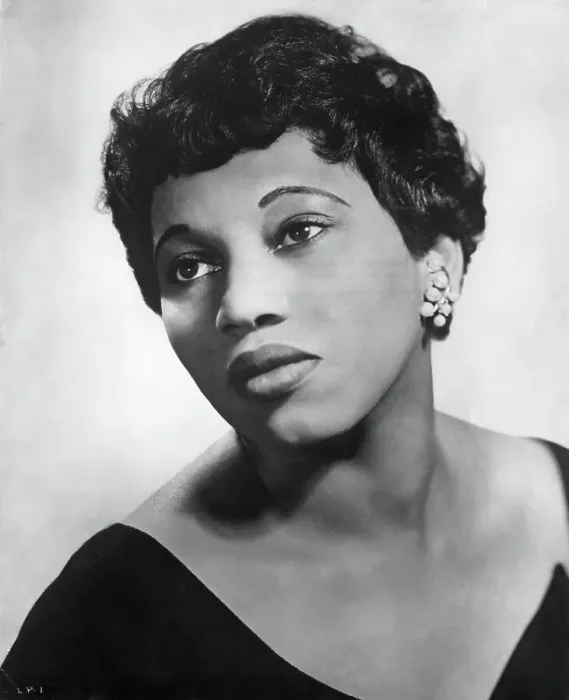
Leontyne Price · historical black-and-white portrait · archival press source
Performance archives
Opera-house archives, broadcasts and programmes establish chronology and repertory.
Recorded evidence
Commercial records and live documents permit direct comparison across years.
Research & legacy
Research themes extending the profile into performance history, reception, technology and pedagogy.
Met archives
Her debut and more than two decades of performances are richly documented.
Civil Rights context
Price’s career belongs within the history of racial integration in American opera.
RCA production history
Studio archives reveal how her recorded identity was constructed.
Role selection
Her decisions about repertoire provide a valuable case study in vocal self-management.
Verdi performance practice
Repeated roles allow study of phrasing, dynamics and ornament across decades.
Public memory
Her symbolic status often intersects with—but should not obscure—close musical analysis.
Chronology
Detailed chronology with dated milestones in formation, repertory, institutions, recordings and legacy.
Born in Laurel, Mississippi.
Begins advanced vocal study in New York.
Stars as Bess in the international touring production.
Appears in NBC Opera productions, reaching a national audience.
Begins major American operatic work.
Vienna, London, Salzburg and Verona establish her internationally.
Rudolf Bing hears her Leonora and offers a Met contract.
Leonora in Il trovatore with Franco Corelli.
Rapidly becomes one of the Met’s central stars.
Aida, Trovatore, Ballo and Forza dominate her repertory.
Fewer but high-profile appearances.
Sings Aida in her final staged Met performance.
Continues selected public appearances and receives major honors.
Participates in a major public event after the September 11 attacks.