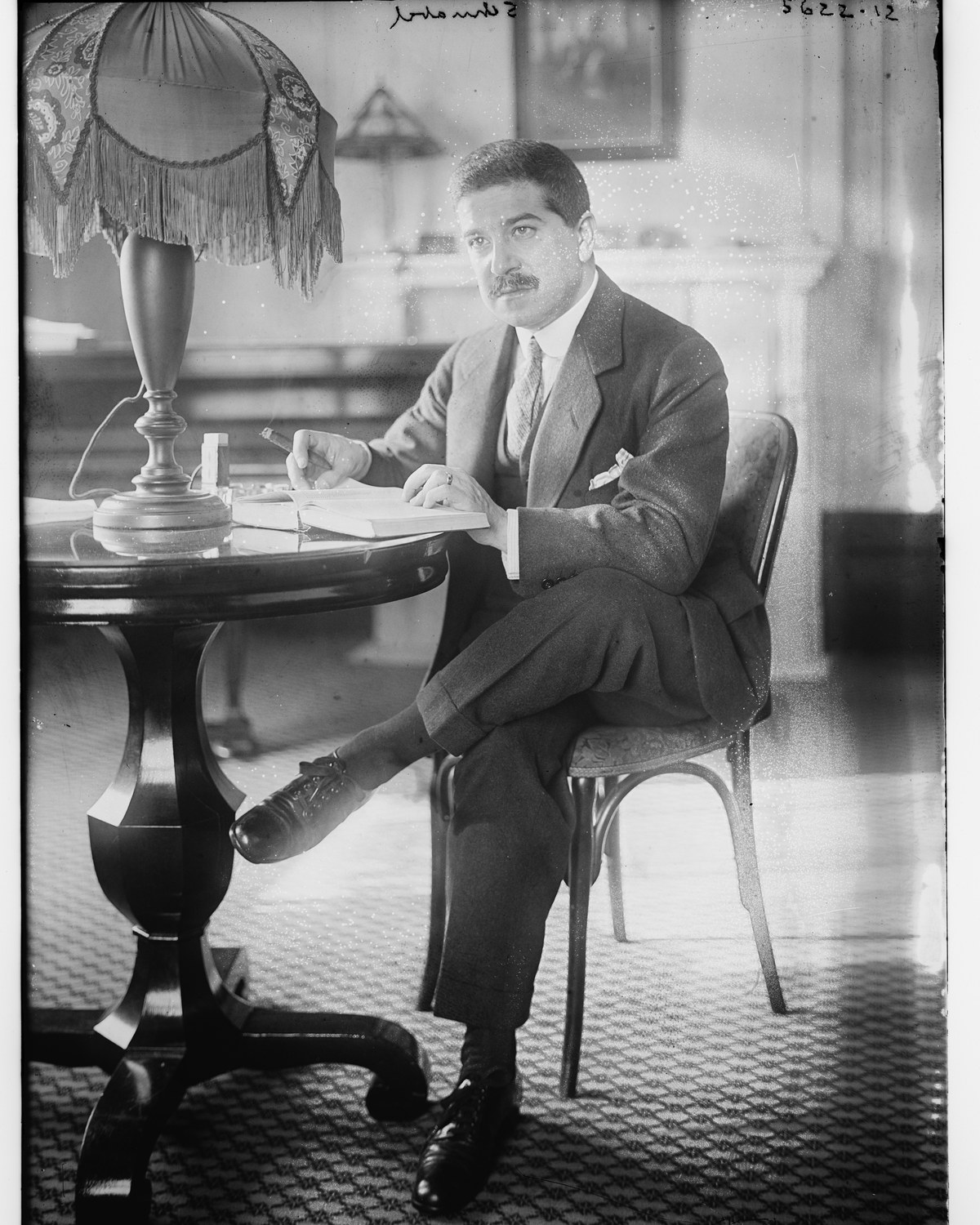
The pianist of musical responsibility
Schnabel transformed seriousness into a compelling performing personality: the score was not a pretext for display but a field of thought, risk and discovery.
Music beyond the performer
Schnabel famously cultivated works that he believed could never be exhausted by performance. Beethoven and Schubert were not vehicles for proving mastery; their very resistance to complete mastery was part of the attraction.
This attitude made his concerts feel exploratory even when the repertoire was familiar. The authority came from intellectual conviction and long experience rather than from a polished image of infallibility.
Beethoven as a lifelong centre
The thirty-two Beethoven sonatas became the axis of Schnabel’s public legacy. He performed complete cycles before such projects were common and then undertook the first complete commercial recording of the cycle.
His Beethoven is notable for long-range architecture, sharply differentiated characters and a refusal to make difficult transitions cosmetically smooth.
Schubert rediscovered
At a time when much of Schubert’s mature piano music was still peripheral to the recital canon, Schnabel championed the late sonatas, Impromptus and other works with unusual persistence.
His advocacy helped change twentieth-century understanding of Schubert from charming miniaturist to one of the central architects of large-scale piano form.
Biography
From a child in Austrian Silesia to Leschetizky’s Vienna, Berlin’s concert life, exile and a decisive American teaching career.
Lipnik, Vienna and an exceptional education
Artur Schnabel was born on 17 April 1882 in Lipnik, then in Austrian Silesia. His family moved to Vienna while he was young, and his early talent quickly led to serious instruction.
After initial study with Hans Schmitt, he entered the orbit of Theodor Leschetizky, one of the most influential piano teachers of the age. He also studied theory with Eusebius Mandyczewski, whose grounding in the classical repertoire reinforced Schnabel’s lifelong structural discipline.
Leschetizky without imitation
Schnabel studied with Leschetizky from 1891 to 1897, alongside an international generation of pianists. Yet his mature art would be notably resistant to a single school style.
What he absorbed most deeply was the demand that technique answer to musical character. He would later distrust formulaic teaching and insist that interpretation should arise from understanding rather than imitation of a teacher’s effects.
Berlin and the making of a musician
In 1899 Schnabel settled in Berlin, which remained his principal base for more than three decades. The city placed him in one of Europe’s richest networks of orchestral, chamber and vocal music.
He married the distinguished contralto Therese Behr in 1905. Their work together deepened his engagement with German song, particularly Schubert, and strengthened the vocal quality of his approach to piano phrasing.
Cycles, teaching and international authority
By the 1920s Schnabel was one of Europe’s leading musical intellectuals at the piano. He taught at the Berlin State Academy from 1925 to 1931 and undertook ambitious recital projects, including the complete Beethoven sonata cycle in Berlin in 1927.
His programs increasingly embodied a coherent artistic philosophy: fewer display pieces, more sustained engagement with works whose formal and spiritual demands exceeded any single performance.
Exile and the American years
The Nazi seizure of power made Germany untenable for Schnabel and his Jewish family. He left Berlin, lived for periods in Italy and elsewhere, and increasingly established himself in the United States from the mid-1930s.
He became an American citizen in 1944 while continuing to teach, perform and compose. After the war he returned to Europe for concerts but never resumed the old Berlin life. He died at Axenstein, Switzerland, on 15 August 1951.
Pianist, composer, thinker
Schnabel’s identity cannot be reduced to the historical-recording canon. His own compositions belong to an uncompromising modernist language and often surprised listeners who expected stylistic continuity with his Beethoven performances.
That apparent contradiction was productive: as an interpreter he served inherited masterpieces; as a composer he felt obliged to write in the language demanded by his own time.
Career
The institutional and artistic milestones of a career built around repertoire rather than celebrity.
Repertoire
A deliberately concentrated canon whose limits were themselves an aesthetic declaration.
Beethoven
Schnabel treated Beethoven’s sonatas and concertos as an integrated world rather than a collection of isolated masterpieces.
His readings stress harmonic direction, motivic relationships and the contrast between rhetorical compression and expansive lyricism.
Schubert
Few pianists did more to secure the late Schubert sonatas in the standard repertoire. Schnabel accepted their scale, repetition and temporal spaciousness rather than trying to make them conform to conventional virtuoso dramaturgy.
The result can feel conversational, visionary and unsettlingly direct.
Mozart and Haydn
His Mozart avoided porcelain elegance. Rhythmic life, articulation and harmonic surprise mattered as much as beauty of tone.
Haydn occupied a smaller but significant place and reinforced his belief that Classical style required wit, flexibility and structural alertness.
Brahms
Brahms linked Schnabel’s chamber-music instincts with the solo repertoire. He valued density without heaviness and sought to keep inner voices alive inside large textures.
The concertos and chamber works benefited from his capacity to think orchestrally while remaining attentive to counterpoint.
A selective canon
Schnabel largely avoided repertory designed primarily for virtuoso exhibition. This was not a technical limitation but an aesthetic choice.
The selectivity itself helped define a twentieth-century ideal of the serious recital pianist whose authority rested on interpretive depth rather than breadth of effects.
Style & interpretation
Structural intelligence, rhythmic freedom and expressive risk without theatrical self-advertisement.
Architecture without rigidity
Schnabel’s command of form did not produce metronomic playing. Tempos could flex sharply when harmony, phrase or dramatic character demanded it.
The large structure remained audible because local freedom was tied to direction rather than applied decoratively.
Risk as an artistic value
His live and studio performances sometimes contain slips, uneven passagework or moments of technical strain. For Schnabel, however, safety could become a greater artistic danger than imperfection.
The best performances transmit a sense of discovery because he was willing to risk the surface in order to preserve momentum, character and structural truth.
Tone as speech
Schnabel’s piano rarely aims at continuous sensuous beauty. He differentiates attack and colour according to syntax, making motives speak, question, answer and interrupt.
This rhetorical conception is especially powerful in Beethoven, where articulation becomes part of dramatic thought.
No cult of personality
His personality is unmistakable, but it is not imposed through theatrical mannerisms. Authority comes from concentration on the score and the conviction that the work remains larger than its interpreter.
This ethic strongly influenced postwar ideals of intellectual seriousness in pianism.
Technique & teaching
A technique placed in the service of phrase, harmony and musical thought; teaching based on principles rather than imitation.
Technique as musical grammar
Schnabel rejected the idea of technique as a separate display mechanism. Finger control, voicing, pedalling and timing were meaningful only in relation to a phrase and its harmonic function.
His own difficult compositions prove that he understood advanced pianistic resources even when his public programs avoided showpieces.
Teaching through questions
He resisted turning students into replicas. Lessons could focus on structure, harmonic meaning and the necessity of making a musical decision rather than on copying a predetermined interpretation.
Among those associated with his teaching were Clifford Curzon, Rudolf Firkušný, Lili Kraus, Claude Frank, Leon Fleisher and Leonard Shure.
Editions and the score
Schnabel’s editions, particularly of Beethoven, preserve fingerings, textual observations and interpretive thought accumulated through repeated performance.
They should not be treated as commandments; their real value lies in showing how a great interpreter interrogated the notation.
Practice beyond correctness
For Schnabel, rehearsal aimed not only to remove errors but to clarify relationships. A technically secure passage could still be musically unprepared if the listener could not sense where it came from and where it was going.
That distinction between correctness and meaning remains central to his pedagogical legacy.
Chamber music & influence
Schnabel’s artistic identity was formed as much in dialogue with singers and string players as at the solo keyboard.
Therese Behr and the culture of song
Schnabel’s partnership with Therese Behr immersed him in the art of supporting breath, text and vocal line. Their Schubert programs in Berlin became historically important events.
The experience helps explain why his piano phrases often sound spoken or sung rather than mechanically projected.
Chamber music as a core discipline
He worked extensively with leading string players, including violinist Carl Flesch and cellist Jean Gérardy, and participated in ensembles that made chamber music central to his artistic identity.
Listening and reacting to another musician reinforced an interpretive style in which flexibility was relational rather than arbitrary.
A postwar lineage
Schnabel’s pupils and admirers transmitted principles rather than a uniform sound: structural responsibility, distrust of empty polish and a belief that the score demands continuous intellectual engagement.
His influence therefore reaches pianists whose actual touch, tempo and temperament differ radically from his own.
Recordings & sound legacy
The discs are not merely historical documents: they remain central evidence in the modern interpretation of Beethoven and Schubert.
Beethoven sonatas
The first complete commercial recording of the thirty-two sonatas remains Schnabel’s central recorded monument and a foundational document in Beethoven interpretation.
Piano concertos
The concerto recordings reveal his collaborative rhythmic flexibility and refusal to turn the solo part into detached virtuoso display.
Late sonatas and Impromptus
These recordings were crucial to the twentieth-century revaluation of Schubert’s piano music and remain among his most persuasive documents.
Concertos and solo works
Schnabel’s Mozart combines grace with muscular rhythm, dramatic contrast and an unusually conversational understanding of Classical syntax.
Chamber and solo repertory
His Brahms shows density, inner-voice awareness and the benefit of a pianist formed by chamber music rather than by solo display alone.
Transfers and remasterings
Surface noise and pre-war recording limitations can obscure dynamic subtlety, but modern transfers make it increasingly possible to hear timing, articulation and voicing with useful clarity.
Images, documents & archives
Institutional resources for reconstructing Schnabel’s performing, composing and teaching life.
Schnabel Music Foundation
The foundation preserves biographical material, discographic information and the wider family legacy, including Schnabel’s work as composer and teacher.
Library of Congress portrait collections
The Bain News Service holdings preserve important photographic documentation of Schnabel’s international career and public image.
Recordings and editions
Commercial discs, annotated editions and surviving lesson testimony form a complementary archive: sound shows what he did, while writings and teaching records illuminate why.
Books & research
Schnabel left an unusually rich intellectual legacy in interviews, writings, editions and testimony from pupils.
My Life and Music
Schnabel’s conversations and autobiographical reflections remain indispensable for understanding his attitudes toward repertoire, performance and the social position of the musician.
Music and the Line of Most Resistance
His essays articulate the principle that serious art often resists immediate convenience, a concept that helps explain both his repertoire and his distrust of superficial virtuosity.
Modern Schnabel research
The Schnabel Music Foundation, discographic scholarship and studies of early recording practice allow researchers to compare textual ideals with the evidence preserved on disc.
The most productive approach treats Schnabel neither as infallible prophet nor as technically unreliable relic, but as a major interpreter whose risks expose the tensions inside the music.
Chronology
Selected dates from an artistic life spanning late Romantic Vienna, interwar Berlin and the American musical world.
Born in Lipnik on 17 April.
Begins formal piano study in Vienna.
Enters Leschetizky’s class.
European concert tours expand.
Settles in Berlin.
Marries contralto Therese Behr.
First major United States tour.
Appointed professor at the Berlin State Academy.
Complete Beethoven sonata cycle in Berlin.
Important Schubert programs with Therese Behr.
Begins complete Beethoven sonata recording project.
Leaves Germany after the Nazi seizure of power.
Completes the Beethoven sonata recordings.
Increasingly establishes his career in the United States.
Becomes an American citizen.
Dies in Switzerland on 15 August.