Vivaldi, Life and Works by Michael Talbot
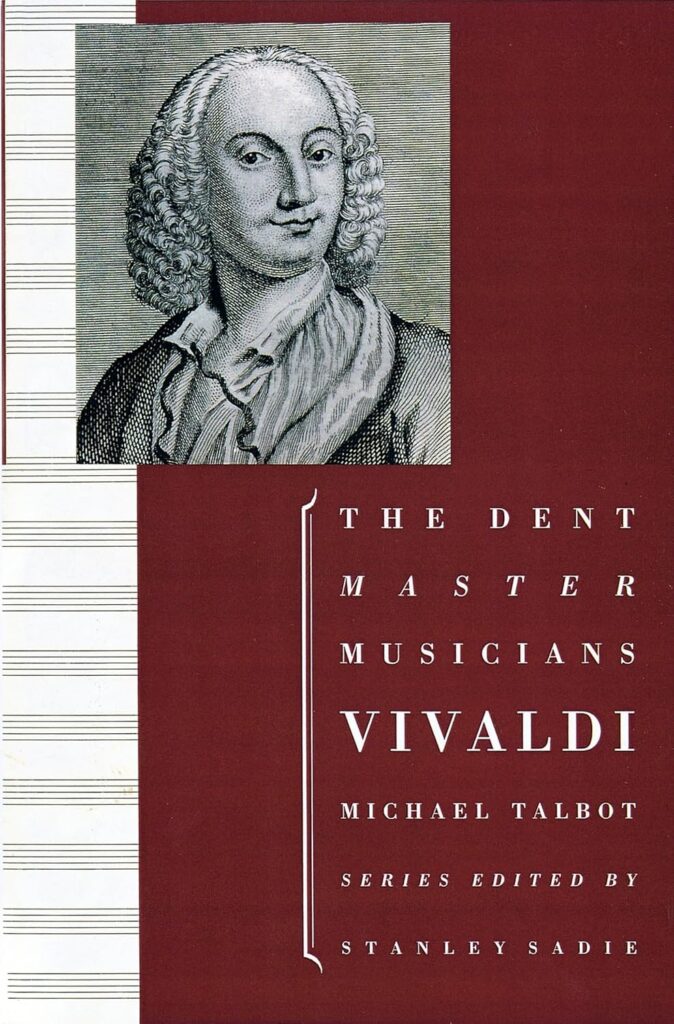
The Book
Vivaldi, written by Michael Talbot, is widely regarded as the most authoritative modern biography of Antonio Vivaldi in English. First published in the late 20th century and revised in later editions, the book reflects decades of archival research and analytical scholarship by the scholar who has arguably done more than anyone else to establish Vivaldi’s true historical and musical stature.
Unlike earlier rehabilitative biographies, Talbot’s study does not argue for Vivaldi’s importance—it demonstrates it through evidence.
Historical Context
Talbot’s book appears at a mature stage of Vivaldi studies, following the rediscovery and cataloguing of manuscripts, the development of critical editions, and the rise of historically informed performance. Where Marc Pincherle wrote as a pioneer reclaiming a neglected composer, Talbot writes as a historian consolidating and refining knowledge.
The result is a biography grounded in documentary precision, free from romantic myth-making and speculative psychology.
Structure and Method
The book is organized chronologically, with exceptional attention to institutional and economic context:
- Venetian origins and family background
- Ordination and the meaning of Vivaldi’s clerical status
- The long and complex relationship with the Ospedale della Pietà
- Vivaldi as violinist, teacher, composer, and entrepreneur
- Opera production across Italy and abroad
- The final Vienna years and posthumous obscurity
Talbot integrates musical analysis directly into the narrative, explaining form, genre, and stylistic development with clarity and restraint. The tone is scholarly but notably sober and balanced.
Major Scholarly Contributions
Among the book’s most important achievements are:
- The demythologization of Vivaldi’s life, including his health, priesthood, and alleged eccentricities
- A rigorous account of Vivaldi’s working methods and compositional speed
- Clear differentiation between documented facts and later legend
- Detailed treatment of lesser-known genres: sacred music, operas, cantatas
- A realistic portrayal of Vivaldi’s decline as economic and institutional, not purely personal
Talbot places Vivaldi firmly within the competitive musical economy of early 18th-century Venice.
Critical Reception
The book has been universally praised for its authority, clarity, and reliability. It is frequently cited as the standard academic reference on Vivaldi in the Anglophone world and is widely used in university teaching.
Some readers note that:
- The tone is intentionally reserved, avoiding dramatic narrative
- Emotional or speculative psychological interpretation is minimal
These qualities are generally seen as strengths rather than weaknesses.
Importance and Legacy
Vivaldi by Michael Talbot stands as the definitive factual biography of the composer. While later studies may focus on specific genres or issues, Talbot’s book remains the essential point of orientation for any serious engagement with Vivaldi’s life and works.
For readers interested in historical truth, musical context, and scholarly rigor, it remains unmatched.
In Perspective
- Pincherle: foundational and rehabilitative
- Talbot: documentary, critical, definitive
Together, they chart the evolution of modern Vivaldi scholarship.