The Romantic World of Puccini – A New Critical Appraisal of the Operas – Iris J. Arnesen
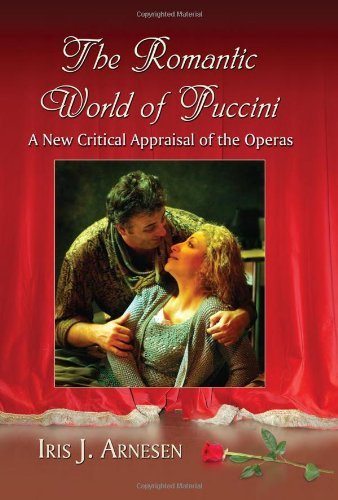
The Romantic World of Puccini: A New Critical Appraisal of the Operas, by Iris J. Arnesen, is a scholarly yet interpretative study that reassesses Giacomo Puccini’s operas from a Romantic, aesthetic, and cultural perspective, pushing back against older narratives that reduced him to a mere verismo melodist or theatrical craftsman.
Intellectual Aim and Perspective
Arnesen’s central purpose is to reposition Puccini within the broader Romantic tradition, rather than viewing him as an isolated late-19th-century realist or a transitional figure toward modernism. She argues that Puccini’s operas embody a coherent Romantic worldview, shaped by symbolism, emotional subjectivity, and a deep concern with memory, longing, and illusion.
Rather than focusing narrowly on biography or reception history, the book treats Puccini as a serious musical dramatist whose works deserve sustained critical engagement on their own aesthetic terms.
Analytical Approach
The study combines musical analysis, dramaturgical interpretation, and literary context, paying close attention to:
- Harmonic language and orchestral color as carriers of psychological meaning
- Motivic recall and transformation as tools of memory and emotional continuity
- Time, stasis, and suspended lyricism, especially in moments of introspection
- The tension between external action and inner emotional worlds
Arnesen is particularly sensitive to Puccini’s ability to create what she terms a “Romantic interiority”, where the orchestra often speaks more deeply than the vocal line itself.
Treatment of Individual Operas
Rather than offering a chronological survey, the book develops thematic readings of key operas, including La Bohème, Tosca, Madama Butterfly, and Turandot. Each is examined as part of a continuous expressive universe, unified by Puccini’s fascination with fragile emotional states, unattainable love, and the tragic consequences of illusion.
Notably, Madama Butterfly is treated not simply as exotic tragedy but as a Romantic meditation on idealization and cultural misunderstanding, while Turandot is approached as Puccini’s most symbolist and psychologically abstract score.
Contribution to Puccini Scholarship
At the time of publication, Arnesen’s book represented a corrective to dismissive or purely theatrical readings of Puccini. It stands alongside more analytically inclined studies by scholars such as William Ashbrook, but distinguishes itself through its philosophical and aesthetic depth rather than archival emphasis.
The book is especially valuable for readers interested in:
- Romanticism beyond Beethoven and Wagner
- The intersection of opera and psychology
- Reconsidering Puccini’s place in the canon with intellectual seriousness
Overall Assessment
The Romantic World of Puccini is a thoughtful, persuasive, and nuanced critical appraisal that elevates Puccini from popular dramatist to Romantic artist of depth and coherence. It rewards careful reading and is particularly well suited to advanced students, scholars, and serious opera lovers seeking a richer understanding of Puccini’s operatic imagination.