The Life of Handel by Victor Schoelcher – Cambridge Library Collection
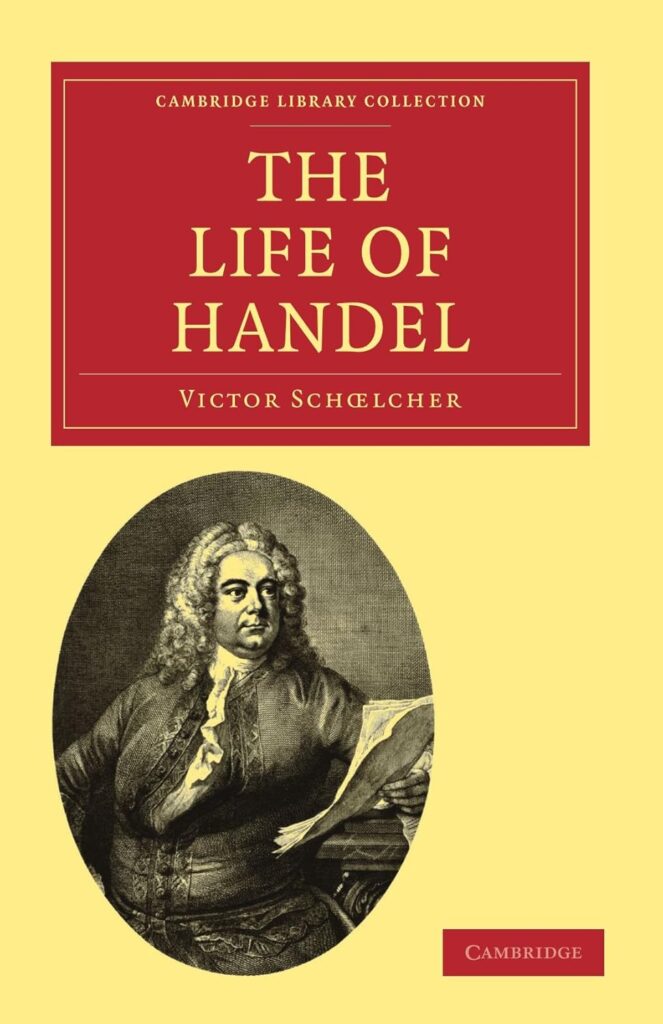
The Life of Handel
(Cambridge Library Collection)
Bibliographical details
- Full title: The Life of Handel
- Author: Victor Schoelcher
- Original publication: 1857, Paris (in French)
- English translation: 1857, published in London
- Modern reprint: Cambridge Library Collection – Music, 2010
- Publisher (reprint): Cambridge University Press
- Length: approximately 500 pages, depending on the reprint format
The Cambridge Library Collection edition is a facsimile reissue of the 19th-century English translation, preserving the original text and structure without modern editorial intervention.
The Author: Victor Schoelcher
Full name: Victor-Prosper Schoelcher
Born: 22 July 1804, Paris
Died: 25 December 1893, Houilles, France
Victor Schoelcher was a French writer, political thinker, and historian, best known internationally as a leading abolitionist responsible for the abolition of slavery in the French colonies in 1848. Alongside his political work, he was a passionate music lover and amateur music historian, particularly devoted to Handel.
Although not a professional musicologist in the modern sense, Schoelcher approached Handel with intellectual seriousness, moral engagement, and historical curiosity, typical of mid-19th-century humanistic scholarship.
Historical context of the book
The Life of Handel belongs to the Romantic era of biography, written at a time when composers were increasingly portrayed as moral and heroic figures. Schoelcher saw Handel not only as a musician but as a symbol of artistic independence, ethical strength, and human dignity.
The book predates modern source criticism and archival methods, but it played a decisive role in shaping Handel’s 19th-century reputation, especially in France and the English-speaking world.
Approach and content
Schoelcher structures Handel’s life chronologically, with strong emphasis on:
- Handel’s early years in Germany
- His formative Italian period
- His long and complex career in London
- The rise of English oratorio as a moral and national art form
The narrative intertwines biography, historical commentary, and aesthetic reflection, often pausing to evaluate Handel’s character, religious outlook, and cultural importance.
Music is discussed descriptively rather than analytically, with particular admiration for:
- Messiah
- Israel in Egypt
- Judas Maccabaeus
- The late oratorios as expressions of moral grandeur
Portrait of Handel
Handel emerges as:
- Strong-willed and independent
- Deeply serious in artistic purpose
- Public-spirited and morally grounded
- Less sentimental than later Romantic portrayals
Schoelcher emphasizes Handel’s ethical stature and civic importance, presenting him as a composer whose music speaks to collective humanity rather than private emotion.
Place within Handel biography
While later scholarship has corrected many factual details and refined the chronology, The Life of Handel remains important for:
- Its early synthesis of Handel’s career
- Its influence on later biographers
- Its role in establishing Handel as a universal moral composer, not merely a historical specialist
The Cambridge Library Collection reprint preserves the book as a historical document, valuable for understanding how Handel was perceived and interpreted in the 19th century.
In summary
Victor Schoelcher’s The Life of Handel is a foundational Romantic biography—not a modern critical study, but a work of intellectual admiration and cultural advocacy. Read today, it offers insight not only into Handel’s life, but into the values, ideals, and historical imagination through which the 19th century understood one of the great figures of Western music.