The Life & Letters of Peter Ilich Tchaikovsky by Modest Tchaikovsky
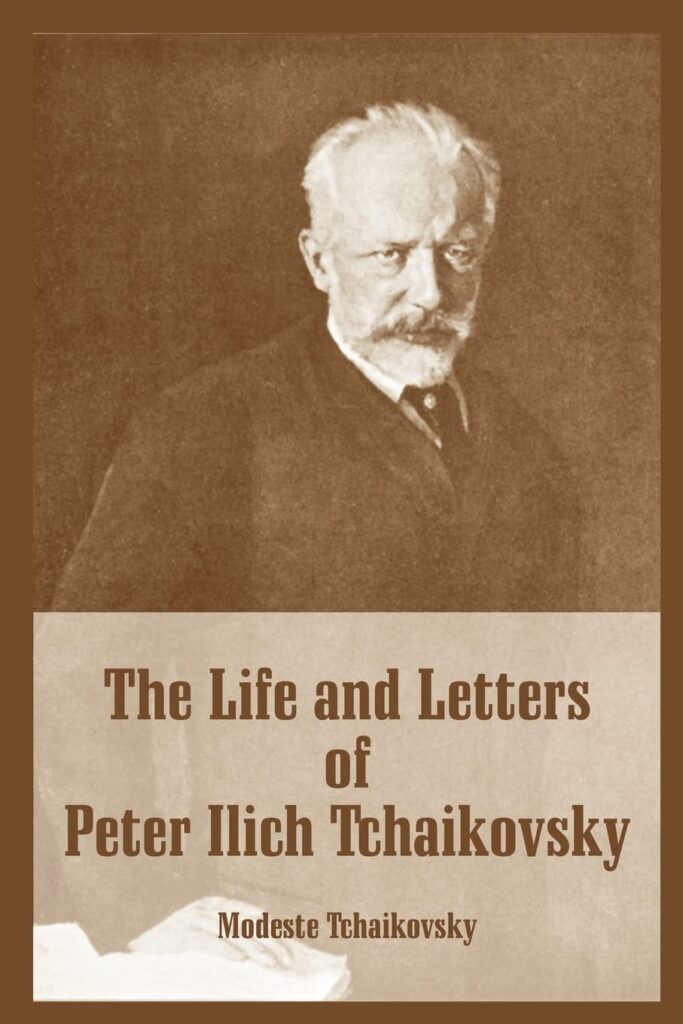
The Life & Letters of Peter Ilich Tchaikovsky
by Modest Tchaikovsky
1. The Nature of the Book: An Intimate, Foundational Biography
The Life & Letters of Peter Ilich Tchaikovsky is one of the earliest and most influential biographies of Pyotr Ilyich Tchaikovsky, written not by a distant scholar but by his younger brother, Modest Tchaikovsky. First published in the years following the composer’s death, the book occupies a unique position: it is simultaneously biography, epistolary collection, and act of personal remembrance.
Unlike later critical biographies, this work was conceived as a memorial document, intended to preserve Tchaikovsky’s voice—his thoughts, doubts, affections, and artistic anxieties—through extensive quotation from his letters. For many decades, it served as the primary source through which the Western world came to know Tchaikovsky the man.
2. Modest Tchaikovsky as Biographer: Proximity and Mediation
Modest Tchaikovsky was not only the composer’s brother but also a constant presence in his emotional life. As a result, the biography offers an exceptional degree of intimacy, particularly in matters of daily life, personal relationships, and psychological vulnerability.
At the same time, Modest was a conscious mediator of his brother’s legacy. He selected, edited, and occasionally paraphrased letters with a clear purpose: to present Tchaikovsky as morally dignified, emotionally sensitive, and artistically serious, while protecting him from scandal and misinterpretation.
This dual role—loving witness and careful guardian—defines the book’s tone and must be kept in mind by modern readers.
3. The Letters: Tchaikovsky Speaking for Himself
The heart of the book lies in the letters themselves, which reveal a composer of extraordinary emotional candor. Through them, we encounter:
- chronic self-doubt and fear of artistic failure
- intense sensitivity to criticism
- deep attachment to friends and family
- a constant oscillation between creative exaltation and despair
These letters illuminate the inner life behind the music, offering insight into the emotional contexts of major works without reducing them to autobiography.
For many readers, this is where the book’s enduring power resides: Tchaikovsky’s own voice, unmediated by later theory or ideology.
4. Art, Suffering, and the Composer’s Self-Image
Modest presents Tchaikovsky as a composer acutely aware of his own psychological fragility. The book repeatedly emphasizes how emotional turmoil, insecurity, and isolation coexisted with periods of intense productivity.
Importantly, the biography does not frame suffering as a romanticized source of genius. Instead, it shows a man who worked despite his inner struggles, often regarding composition as both refuge and burden.
This portrait deeply influenced twentieth-century perceptions of Tchaikovsky as the archetypal vulnerable Romantic composer.
5. Silences, Omissions, and Historical Limits
From a modern standpoint, the book’s most discussed limitation lies in what it does not say. Modest Tchaikovsky deliberately avoided explicit discussion of:
- his brother’s homosexuality
- certain personal relationships
- aspects of the circumstances surrounding his death
These omissions were shaped by the moral and social constraints of late-19th-century Russia and by Modest’s protective intentions. Later scholarship has filled many of these gaps, but the silences themselves are historically revealing, reflecting how identity and reputation were managed in the period.
6. Influence and Legacy
Despite its limitations, The Life & Letters of Peter Ilich Tchaikovsky remains indispensable. Nearly all later biographies—whether critical, revisionist, or psychoanalytic—are built upon the documentary foundation Modest established.
The book’s influence extends beyond scholarship: it shaped how performers, conductors, and listeners emotionally approached Tchaikovsky’s music throughout the twentieth century.
7. How to Read This Book Today
Today, the book is best read:
- as a primary historical document
- as a curated self-portrait of the composer
- alongside later critical biographies for balance
It rewards readers not seeking final answers, but those wishing to hear Tchaikovsky think, worry, hope, and create in real time.
Conclusion
The Life & Letters of Peter Ilich Tchaikovsky is not a neutral biography, nor does it pretend to be. It is an act of devotion, shaped by love, loyalty, and restraint. Precisely for that reason, it remains one of the most moving and revealing documents in music biography—allowing us to encounter Tchaikovsky not as myth or symbol, but as a living human voice.