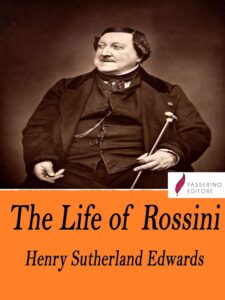
Rossini: A Biography
Researched Bibliographic Dossier
Verified edition data and a musicological research note prepared specifically for this work.
- Title
- Rossini: A Biography
- Author
- Herbert Weinstock
- Language
- English
- Type
- Composer biography / opera history
- Subject
- Opera / vocal performance / music biography
SCOPE & CONTENT
A curated dossier for Rossini: A Biography by Herbert Weinstock. The work is included for its direct relevance to opera history, vocal interpretation, repertory, or the biography of major operatic figures. The record is designed to make the book discoverable through both personal names and work titles even when a scanned PDF or attachment uses an abbreviated filename.
RESEARCH VALUE
For research, this title is useful as a source on Rossini and should be read in relation to recordings, contemporary reviews, correspondence, production history and later scholarship. Where the book is memoir-based or authorized, its proximity to the subject is valuable but also requires comparison with independent documentation.
OPERATIC AND BIOGRAPHICAL SCOPE
The dossier emphasizes concrete operatic relevance: roles, repertory, premieres, theatres, collaborators, recording history, stylistic development and the professional networks surrounding the subject are treated as primary research pathways.
RESEARCH AND CATALOGUE USE
The catalogue layer is non-destructive. Verified bibliographic data may populate empty Library fields when a physical document can be matched safely, while the underlying PDF, title and existing correct metadata remain unchanged.
- Format
- File size
- 722.2 KB
- Subjects / people
- Books & Essays · Composers · Gioachino Rossini · Biographies & Monographs
- Catalogue completeness
- 3 / 10 core bibliographic fields
Extended Editorial Dossier
Existing Classical Archive editorial content associated with this document, integrated here as reference material. File controls and direct PDF/DOC links are excluded from this bibliographic copy.
The Life of Rossini by H. Sutherland Edwards
Subject, scope, and critical evaluation
What the book is about
The Life of Rossini is a 19th-century English biography of Gioachino Rossini, written while the composer was still alive and already considered a historical figure. The book offers a chronological narrative of Rossini’s life, from his childhood and musical training in Italy to his spectacular rise as the most successful opera composer of his generation, and finally to his long withdrawal from the operatic stage after Guillaume Tell.
Edwards presents Rossini not only as a composer but as a social and cultural phenomenon. Considerable attention is given to:
- Rossini’s early career in Italian opera houses, his astonishing speed of composition, and the conditions of operatic production in early 19th-century Italy.
- His international success, especially in Paris, and his role in shaping both Italian bel canto and French grand opera.
- His relationships with singers, impresarios, patrons, and fellow composers, often illustrated through anecdote rather than documentary analysis.
- His premature retirement from opera and later life as a celebrated, witty, and sometimes enigmatic musical personality.
The book is written in a literary, discursive style, typical of Victorian biography, aiming more at an educated general readership than at academic specialists.
Authorial perspective and method
H. Sutherland Edwards was a journalist and music critic, not a professional musicologist. As a result, the biography emphasizes:
- Narrative flow and character portrayal over technical musical analysis
- Anecdotes, personal impressions, and contemporary opinion
- A clear admiration for Rossini, combined with a certain moral and aesthetic framework typical of the Victorian era
Musical works are discussed primarily in terms of their public reception and historical importance, not through detailed structural or stylistic analysis.
Strengths of the book
- Historical proximity: The biography reflects how Rossini was understood and judged by the generation that had directly experienced his operatic dominance.
- Vivid storytelling: The prose is engaging, readable, and rich in detail about theatrical life, singers, and audiences.
- Cultural context: The book is valuable for understanding 19th-century operatic culture, especially the economics and social dynamics of opera production.
- Portrait of personality: Rossini emerges as a complex figure—brilliant, ironic, pragmatic, and sometimes elusive.
Limitations and weaknesses
- Outdated scholarship: Many factual interpretations have been refined or corrected by later research.
- Limited musical analysis: Readers looking for in-depth discussion of Rossini’s compositional techniques will find the treatment superficial.
- Victorian bias: Edwards occasionally judges Rossini through moral or aesthetic standards that no longer align with modern musicology.
- Lack of critical distance: The tone is often admiring, and some controversial aspects of Rossini’s career are softened.
Overall evaluation
The Life of Rossini remains a valuable historical document rather than a modern critical biography. Its importance lies less in factual precision or analytical depth than in its ability to convey how Rossini was perceived in the late 19th century: as a composer who had reshaped opera, dominated Europe’s stages, and then mysteriously stepped away at the height of fame.
For today’s reader, the book is best approached as:
- A primary source for reception history
- A rich narrative complement to modern scholarly biographies
- A window into Victorian musical thought
It is particularly rewarding for readers interested in opera history, cultural context, and biographical storytelling, rather than strictly analytical musicology.