Concert Halls and Opera Houses – Music, Acoustics, and Architecture – Leo Beranek
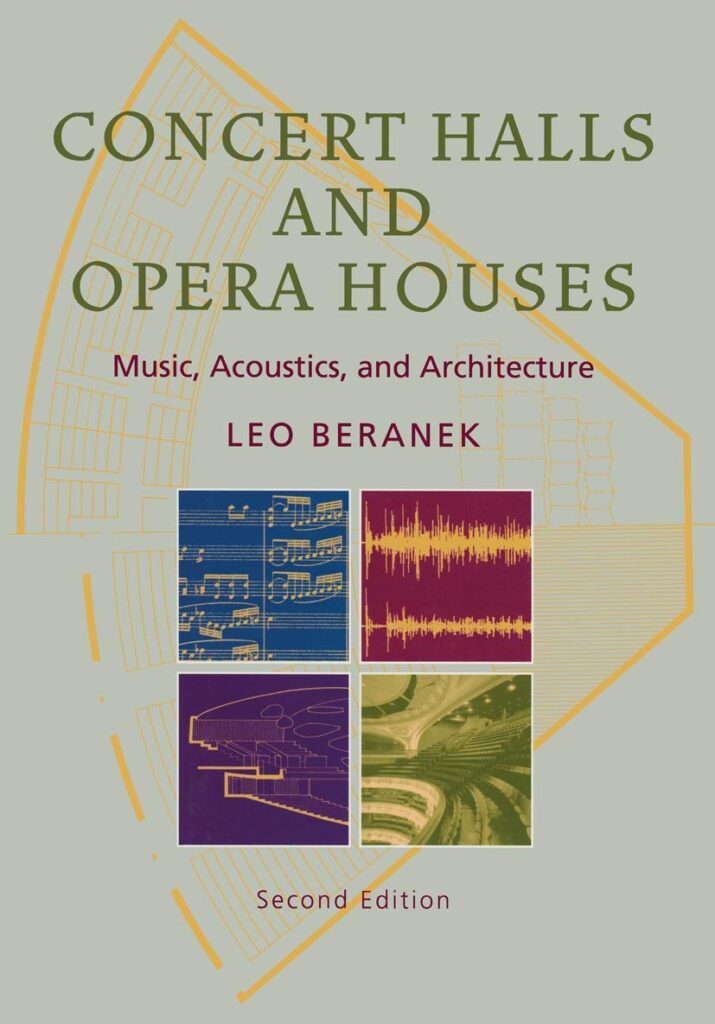
Concert Halls and Opera Houses – Music, Acoustics, and Architecture
Concert Halls and Opera Houses – Music, Acoustics, and Architecture by Leo Beranek is universally regarded as the foundational work on the acoustics of performance spaces, a book that permanently changed how concert halls and opera houses are designed, evaluated, and understood.
This is not merely a technical manual. It is a cultural history of listening, written by a scientist who loved music deeply and who believed that acoustics could—and should—serve artistic truth.
Conception and Writing
- Date of composition: late 1950s – early 1960s
- Written after Beranek had:
- measured and analysed dozens of the world’s major halls
- attended countless concerts and operatic performances
- consulted as an acoustician on new building projects
At the time, acoustics was still often treated as an afterthought in architectural design. Beranek’s work emerged from a conviction that musical experience could be objectively studied without diminishing its emotional power.
First Publication
- First edition: 1962
- Publisher: McGraw-Hill
- Place of publication: New York
The book immediately established itself as a landmark, bridging engineering, architecture, and musical culture in a way no previous study had done.
Subsequent Editions and Revisions
Because concert hall design evolved rapidly after 1960, Beranek substantially revised the book:
- Second edition:1996
- expanded measurements
- inclusion of modern halls
- reassessment of earlier conclusions
- Third edition:2004
- retitled and further expanded
- incorporation of digital acoustic modelling
- updated evaluations of late 20th-century venues
Each edition reflects a new stage in both architectural practice and acoustic science, making the book a living document rather than a static classic.
Structure and Method
Beranek’s approach is systematic yet accessible. He combines:
- architectural description
- acoustic measurement (reverberation, clarity, intimacy)
- listener perception
- musical repertoire suitability
Historic halls such as the Vienna Musikverein, Boston Symphony Hall, and La Scala are treated as case studies, not as untouchable monuments. Their virtues and limitations are analysed with scientific precision and musical sensitivity.
Opera Houses vs Concert Halls
One of the book’s major contributions is its clear distinction between the acoustic needs of opera and symphonic music. Beranek shows why:
- singers require vocal projection and textual clarity
- orchestral music thrives on blend and reverberation
This explains why some visually magnificent opera houses fail musically—and why some modest-looking halls achieve legendary sound.
Tone and Style
Despite its technical foundation, the book is remarkably readable. Beranek writes with:
- clarity and restraint
- respect for performers and audiences
- an absence of dogmatism
His authority derives not from theory alone, but from listening experience, repeatedly tested against measurement.
Why the Book Matters
Concert Halls and Opera Houses reshaped:
- architectural education
- the practice of acoustic consulting
- public understanding of why some halls sound “right”
Nearly every major concert hall built since the late 20th century owes a direct or indirect debt to Beranek’s principles.
Bibliographic Summary
- Author: Leo Beranek
- Title: Concert Halls and Opera Houses – Music, Acoustics, and Architecture
- Composition: c. 1958–1961
- First publication: 1962
- Publisher: McGraw-Hill (New York)
- Major editions: 1962, 1996, 2004
- Genre: acoustics / architecture / music studies
Final Perspective
This book teaches a crucial lesson: great sound is not accidental. It is the result of proportion, material, volume, and informed design—guided by an understanding of how humans listen to music in space.
More than sixty years after its first publication, Beranek’s work remains the definitive reference for anyone who wishes to understand why the places in which we hear music matter as much as the music itself.