Beethoven after Napoleon Political Romanticism in the Late Works by Stephen Rumph
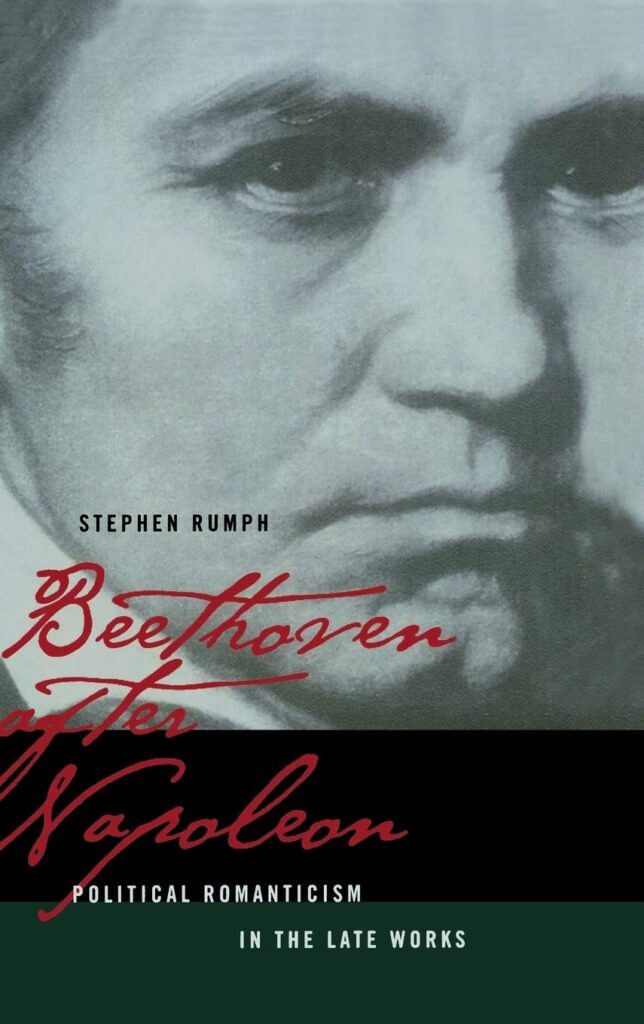
After 1815, Ludwig van Beethoven lived in a Europe that no longer resembled the world in which his heroic ideals had been formed. The fall of Napoleon, once admired by Beethoven as the embodiment of Enlightenment energy and civic virtue, left behind not liberation but restoration, censorship, and moral exhaustion. Vienna, now the capital of political reaction after the Congress of 1814–15, became a city of surveillance and resignation. It is in this atmosphere that Stephen Rumph situates Beethoven’s late works—not as timeless metaphysics, but as music born from political disillusionment.
Rumph’s book tells a story of withdrawal without surrender. Beethoven did not become apolitical after Napoleon; rather, he ceased to believe that political power could carry ethical meaning. The public world had betrayed its promises. What followed was not silence, but a profound transformation of musical language—one that sought moral truth beyond institutions, beyond armies, beyond emperors.
The late works emerge, in Rumph’s narrative, as acts of remembrance and resistance. Where earlier compositions had addressed the public sphere with rhetorical force, the music after 1815 turns inward, fragmented, often austere. Forms seem to hesitate, to break apart, to begin again. This is not technical eccentricity. It is history speaking through form. Beethoven’s music no longer proclaims victory; it questions, remembers, and judges.
In the late string quartets, Rumph hears a composer confronting the collapse of heroic continuity. Time no longer flows forward confidently; it circles, pauses, and fractures. Sudden silences, abrupt contrasts, and archaic gestures feel like ethical refusals—a rejection of triumphant narratives in a world that no longer deserves them. These works do not escape history; they carry its wounds.
The Missa solemnis stands at the center of this moral reorientation. Beethoven’s faith here is neither institutional nor comforting. It is severe, inward, and demanding. Rumph reads the Mass as a response to political catastrophe: a work that refuses both revolutionary optimism and reactionary piety, proposing instead a private, uncompromising moral stance. Belief survives, but only as conscience.
Even the Ninth Symphony, so often heard as a universal celebration, is recast by Rumph as a work marked by historical strain. Its famous finale does not flow naturally from what precedes it; it interrupts, negates, rebuilds. Brotherhood is proclaimed only after negation and struggle. The joy is hard-won, almost defiant—a vision of community imagined against history, not within it.
What Rumph ultimately reveals is a Beethoven who becomes, in his final decade, a political Romantic in the deepest sense. Not a dreamer detached from reality, but an artist who recognizes that power corrupts ideals, and that art must preserve them in altered form. Beethoven’s late music does not aim to rule the world; it aims to remember what the world has forgotten.
In this reading, the late style is neither mystical retreat nor technical abstraction. It is a moral language forged in defeat, a way of sustaining freedom when public freedom has failed. Beethoven after Napoleon no longer writes for emperors or crowds, but for a future listener capable of hearing history, conscience, and resistance embedded in sound.
Stephen Rumph’s book thus transforms our understanding of Beethoven’s final years. The late works are not the end of history, but its reckoning: music that stands quietly, stubbornly, against the ruins of political hope—and insists that meaning, though battered, still survives.