A Night at the Opera – An Irreverent Guide to the Plots, the Singers, the Composers, the Recordings – Sir Denis Forman
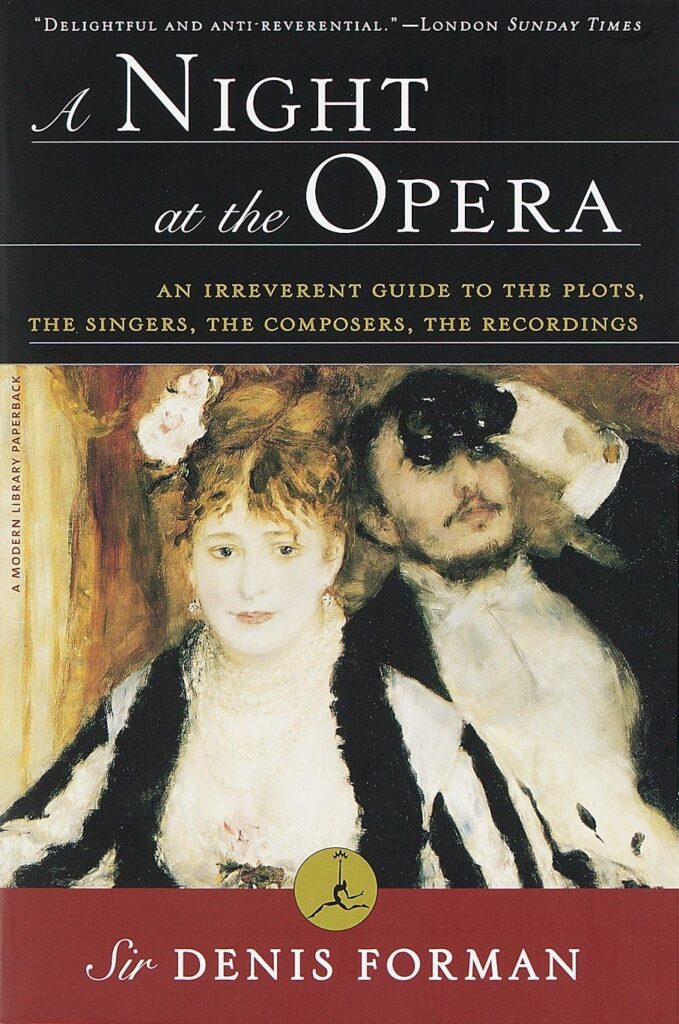
A Night at the Opera – An Irreverent Guide to the Plots, the Singers, the Composers, the Recordings by Sir Denis Forman is one of the most distinctive and entertaining opera books of the late 20th century—an unapologetically personal guide written by a man who loved opera deeply but refused to treat it with false reverence.
Forman, a legendary British television executive and lifelong opera addict, approaches the genre not as a scholar or critic, but as an experienced, witty companion whispering commentary from the seat beside you in the opera house.
Conception and Writing
- Date of composition: mid–late 1980s
- Written after decades of immersion in:
- live opera performance
- recorded opera (LP and early CD eras)
- close contact with singers, conductors, and producers
The book reflects the mature voice of someone who has heard everything, admired much, and endured a fair amount, and who now feels free to say exactly what he thinks.
First Publication
- First edition: 1994
- Publisher: BBC Books
- Place of publication: London
Its association with BBC Books is significant: the tone mirrors the best traditions of British broadcasting—informal, intelligent, irreverent, and educational without pedantry.
Editions and Formats
- Print editions: hardcover and paperback
- Later availability: reprints and digital scans
- No radically revised “second edition,” but multiple reissues
Unlike academic handbooks, the book has remained relevant because its opinions are anchored in taste and experience rather than fashion.
Structure and Content
Rather than offering exhaustive coverage, Forman selects operas he cares about and treats each as a theatrical event, not a museum object. Each entry typically includes:
- a brisk, sometimes mischievous plot summary
- candid opinions about composers and libretti
- sharp observations on singers and vocal types
- enthusiastic (and sometimes opinionated) commentary on recordings
He is particularly good at explaining why certain operas work in the theatre and others don’t, regardless of their canonical status.
Tone and Style
The defining feature of the book is its voice:
- witty, conversational, occasionally caustic
- deeply informed but never academic
- full of strong preferences and unapologetic dislikes
Forman delights in puncturing pomposity. Bad libretti, overpraised singers, and dull productions are dispatched with dry humour. Yet beneath the irony lies profound love for the art form.
This is irreverence as affection, not cynicism.
Recordings and Performance Practice
One of the book’s most valuable aspects is its commentary on recordings. Forman writes from the perspective of someone who lived through:
- the great LP era
- the rise of stereo opera recordings
- the early CD boom
His recommendations are often subjective but remarkably perceptive, especially regarding casting and dramatic truth.
Why the Book Matters
A Night at the Opera occupies a unique niche:
- not a scholarly history
- not a neutral reference book
- not merely comic writing
It is instead a personal opera education, showing readers how to listen, judge, and enjoy opera as living theatre.
For many readers, it served as a gateway book—liberating them from the fear of “not understanding” opera.
Bibliographic Summary
- Author: Sir Denis Forman
- Title: A Night at the Opera – An Irreverent Guide to the Plots, the Singers, the Composers, the Recordings
- Composition: c. late 1980s–early 1990s
- First publication: 1994
- Publisher: BBC Books (London)
- Genre: opera guide / critical commentary
Final Perspective
This book teaches an essential lesson: opera thrives not on solemnity, but on engagement, curiosity, and emotional honesty. Forman gives readers permission to laugh, disagree, change their minds—and still love opera passionately.
It remains one of the most human, readable, and liberating opera books ever written.