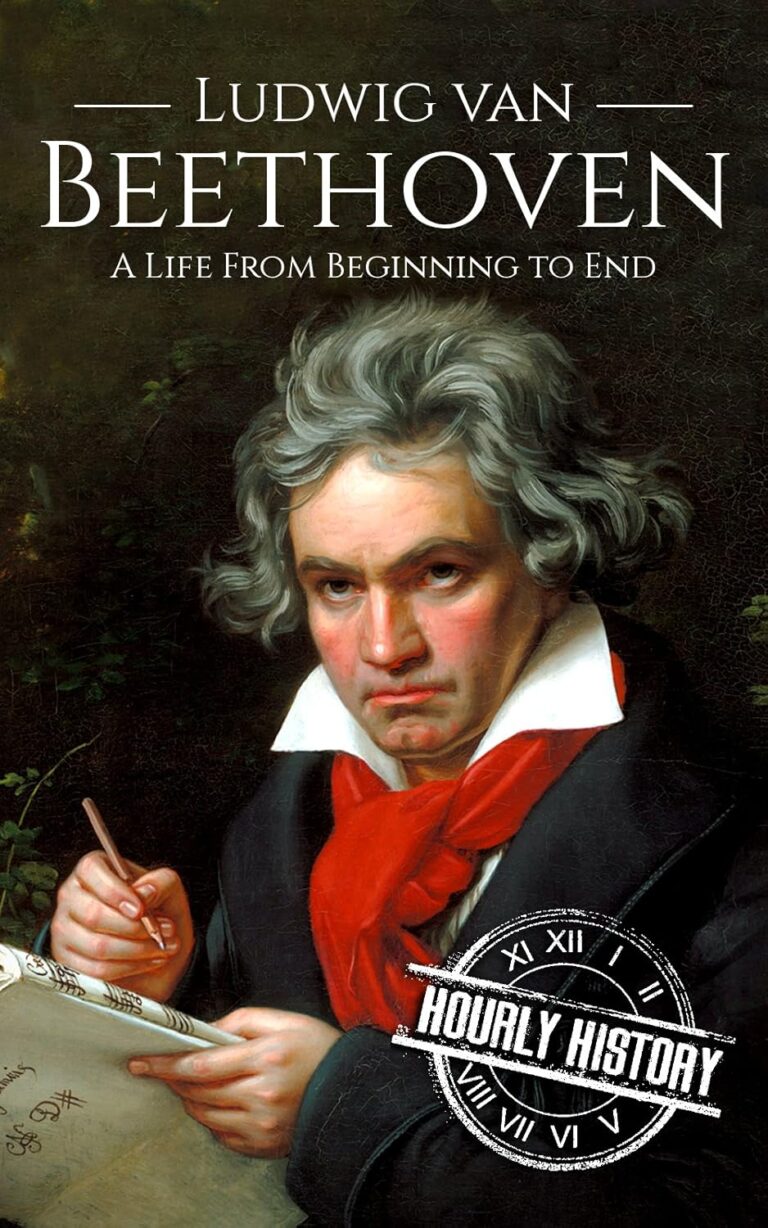
Ludwig van Beethoven
Origins, Formation, and the Bonn Years (1770–1792)
Birth, Family, and Early Environment
Ludwig van Beethoven was born in Bonn in December 1770, baptized on the 17th, into a family of musicians connected to the court of the Elector of Cologne. His grandfather, also named Ludwig van Beethoven, had been Kapellmeister and was a figure of authority and artistic dignity within the household. By contrast, Beethoven’s father, Johann, was a tenor in the court chapel whose alcoholism and instability cast a long shadow over the composer’s childhood.
From an early age, Beethoven’s musical abilities were evident. His father attempted to mold him into a child prodigy in the manner of Mozart, subjecting him to harsh and often humiliating discipline. These experiences fostered both an early sense of independence and a lifelong resistance to authority.
Education and Intellectual Awakening
Beethoven’s formal musical education was irregular but intense. His most important early mentor was Christian Gottlob Neefe, court organist, who introduced him to the works of Bach and the ideals of the Enlightenment. Under Neefe’s guidance, Beethoven published his first compositions and developed a deep respect for counterpoint and structural clarity.
Equally formative was the intellectual atmosphere of Bonn. The city was a center of progressive thought, and Beethoven was exposed to Enlightenment philosophy, republican ideals, and humanist literature, influences that would later shape his conception of music as a moral and spiritual force.
The Decision to Leave Bonn
By his early twenties, Beethoven had outgrown Bonn’s limited musical possibilities. Encouraged by patrons and already recognized as a composer of promise, he set his sights on Vienna—the musical capital of Europe. In 1792, Beethoven left Bonn permanently, marking the end of his formative years and the beginning of a new artistic identity.
Vienna, Virtuosity, and the Classical Inheritance (1792–1802)
Arrival in Vienna and Studies
Beethoven arrived in Vienna to study with Joseph Haydn, the most celebrated composer of the age. Although their relationship was respectful but strained, Beethoven absorbed the Classical tradition while gradually asserting his own voice. Additional studies with Johann Georg Albrechtsberger and Antonio Salieri refined his mastery of counterpoint and vocal writing.
Rise as a Pianist and Composer
During the 1790s, Beethoven established himself as one of Vienna’s most formidable pianists, renowned for his improvisational power and dramatic intensity. His early piano sonatas, chamber works, and concertos reveal a composer working within Classical forms while subtly stretching their expressive boundaries.
Unlike most composers of his time, Beethoven pursued an unprecedented degree of artistic independence, relying on aristocratic patrons without accepting a permanent court position. This autonomy allowed him to define himself not as a servant but as a creative equal.
The Crisis of Deafness
Around 1798, Beethoven began to experience the first symptoms of hearing loss. By 1802, the condition had worsened to the point of despair. In the Heiligenstadt Testament, a private document never intended for publication, Beethoven confronted thoughts of suicide and isolation, yet resolved to live for his art.
This moment represents a profound psychological rupture. Deafness became the catalyst for a radical transformation, forcing Beethoven inward and reshaping his understanding of music as an expression of inner necessity rather than public display.
Heroic Expansion and Moral Vision (1803–1812)
The “Heroic” Style
Following the crisis of Heiligenstadt, Beethoven entered what is often called his “Heroic” period. Works such as the Third Symphony (Eroica), the Fifth Symphony, and the opera Fidelio demonstrate an unprecedented expansion of scale, ambition, and emotional range.
Music became for Beethoven a vehicle for ethical struggle, resistance, and affirmation. The Eroica, originally dedicated to Napoleon, was famously retracted when Napoleon crowned himself emperor—an act that symbolized Beethoven’s rejection of tyranny.
Formal Innovation
During this period, Beethoven transformed Classical forms from within. Sonata structures became dramatic narratives, motifs assumed symbolic weight, and rhythmic drive took on a new psychological urgency. His music no longer merely pleased; it demanded engagement.
Personal Turmoil and the “Immortal Beloved”
Despite artistic triumphs, Beethoven’s personal life remained turbulent. His deep longing for companionship and love found expression in intense but ultimately unsuccessful relationships, culminating in the mysterious figure of the “Immortal Beloved.” These emotional struggles deepened the expressive tension of his music.
By 1812, exhaustion—physical, emotional, and social—began to set in, signaling the close of this expansive phase.
Withdrawal, Silence, and Inner Reconstruction (1813–1819)
Decline of Public Life
As Beethoven’s deafness became nearly total, he withdrew increasingly from public performance. Communication grew difficult, and social misunderstandings multiplied. His once-dominant presence in Vienna’s musical life diminished, replaced by a sense of isolation.
Personal and Legal Struggles
This period was marked by the custody battle for his nephew Karl, a protracted and emotionally draining conflict that revealed Beethoven’s rigidity, moral absolutism, and deep capacity for care. The struggle consumed much of his energy and exacerbated his sense of alienation.
Compositional Transition
Although fewer major works emerged during these years, Beethoven was quietly preparing for a new phase. He began to rethink musical language itself, moving away from external drama toward introspection, abstraction, and spiritual exploration.
This was a time of inward reconstruction—a necessary silence before the final ascent.
The Late Style and Transcendence (1820–1827)
A New Musical Language
In his final years, Beethoven produced some of the most extraordinary works in Western music: the late piano sonatas, the late string quartets, the Missa solemnis, and the Ninth Symphony. These compositions defy conventional categories of form, beauty, and expression.
The late style is characterized by fragmentation, extreme contrasts, spiritual depth, and a radical rethinking of musical time. Counterpoint, variation, and silence assume new symbolic significance.
The Ninth Symphony
The Ninth Symphony stands as Beethoven’s most public and universal statement. By introducing the human voice into the symphonic form, Beethoven affirmed a vision of human brotherhood, joy, and moral unity, despite his own profound isolation.
Death and Legacy
Beethoven died in Vienna in March 1827. His funeral was attended by thousands, a testament to the recognition he achieved in his lifetime. Yet his true legacy unfolded gradually.
Beethoven redefined the role of the composer, transforming music into a medium of personal truth, ethical struggle, and metaphysical inquiry. His influence shaped Romanticism and continues to define the expressive possibilities of music to this day.l essay forthcoming.