Schumann – Eric Frederick Jensen
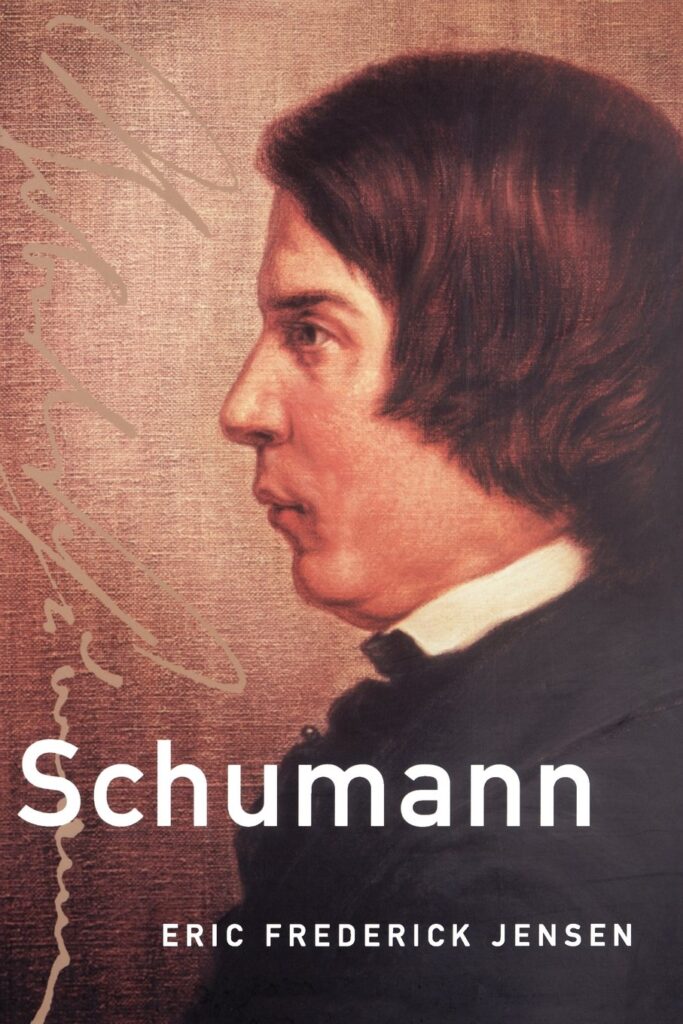
Bibliographical details
- Author: Eric Frederick Jensen
- Publisher: Oxford University Press
- First publication: 2001
- Series: Oxford Master Musicians
- Length: approximately 330–360 pages, depending on the edition
Conceived as a modern scholarly biography, the book aims to integrate life, works, and historical context without the speculative psychology or Romantic mythmaking that characterized much earlier Schumann literature.
The Author: Eric Frederick Jensen
Eric Frederick Jensen is an American musicologist and academic, specializing in nineteenth-century German music, with particular emphasis on Schumann, Mendelssohn, and the cultural history of Romanticism. He has taught at major universities in the United States and is known for combining archival precision with cultural interpretation.
Jensen’s scholarship is marked by:
- Careful use of primary sources (letters, diaries, contemporary criticism)
- Skepticism toward retrospective diagnosis and anecdotal legend
- Attention to institutional, social, and economic realities of musical life
Approach and structure of the book
Schumann is organized chronologically, but with strong thematic undercurrents. Jensen follows Schumann’s life from:
- Childhood and education in Zwickau
- Abandoned legal studies and musical formation
- Years as critic and editor of the Neue Zeitschrift für Musik
- Marriage to Clara Schumann and the intense creative decades
- Decline in mental health and final years in Endenich
At each stage, compositions are discussed in direct relation to life circumstances, professional pressures, and intellectual commitments.
View of Schumann
Jensen presents Schumann as:
- A deeply literary and intellectual composer
- A figure shaped by German Romantic philosophy and poetry
- Artistically disciplined, despite surface impressions of volatility
- Less impulsive and less fragmented than older biographies suggest
Crucially, Jensen resists pathologizing Schumann’s creativity. Mental illness is treated as a serious historical reality, but not as a simplistic explanatory key for the music.
Music and criticism
The book places special emphasis on Schumann’s dual identity as composer and critic. Jensen shows how:
- Schumann’s criticism shaped early Romantic musical values
- His fictional personae (Florestan, Eusebius) functioned as aesthetic metaphors, not clinical symptoms
- His compositional evolution reflects long-term artistic planning, not erratic inspiration
Musical discussion is analytical but readable, focusing on form, genre, and expressive intent rather than technical minutiae.
Position within Schumann literature
This biography marked a turning point in English-language Schumann studies, standing apart from:
- Highly romanticized early biographies
- Psychoanalytic or speculative accounts of Schumann’s illness
It is now regarded as one of the most reliable and balanced modern lives of Schumann, frequently cited alongside the major German documentary editions.
In summary
Eric Frederick Jensen’s Schumann is a clear-eyed, authoritative, and humane biography. It restores Schumann as a thinking artist and cultural actor, grounding his music in history without diminishing its poetic power. For readers seeking a serious, modern understanding of Robert Schumann, this book remains an essential reference.