Mahler’s Symphonic Sonatas – Seth Monahan – (Oxford Studies in Music Theory)
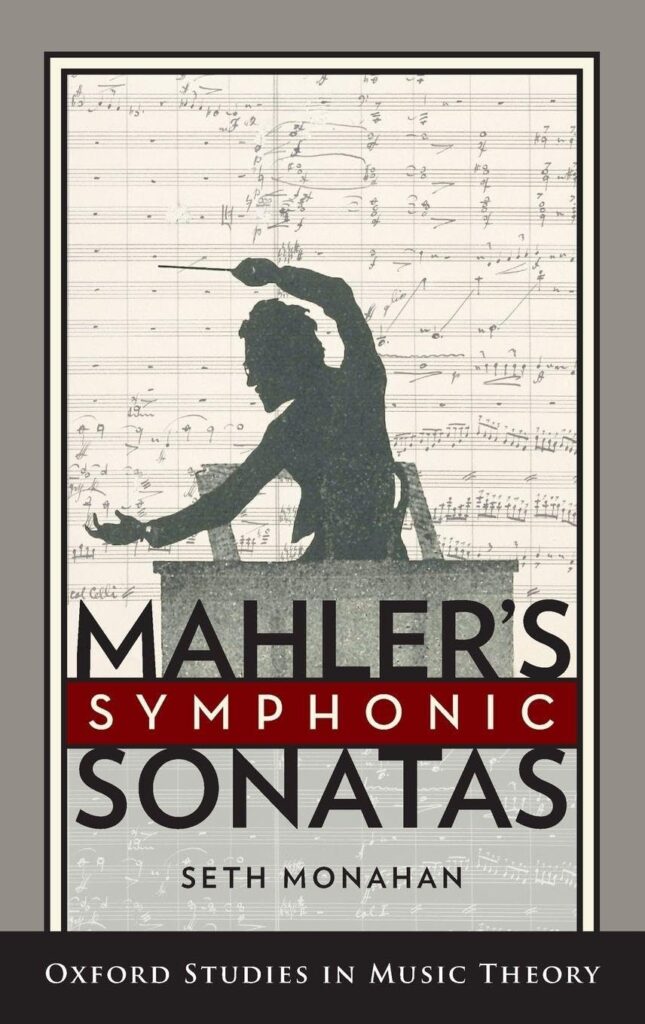
Mahler’s Symphonic Sonatas
by Seth Monahan
1. What This Study Is — and What It Is Not
Mahler’s Symphonic Sonatas is a highly focused analytical study that addresses one of the most persistent questions in Mahler scholarship:
how Mahler engages with sonata form in his symphonies without simply inheriting it from Beethoven and Brahms.
Seth Monahan does not write biography, reception history, or philosophical commentary. His aim is structural and analytical clarity. The book belongs squarely to advanced music theory, yet it remains readable because its arguments are driven by musical intuition rather than abstract formalism.
This is not a book about “Mahler and sonata form” in the traditional sense. As the title suggests, Monahan proposes something more radical: Mahler’s symphonies themselves behave like sonatas, on a symphonic scale.
2. The Central Thesis: Sonata Form Reimagined
Monahan’s core claim is that Mahler does not abandon sonata form, nor does he merely stretch it. Instead, Mahler reconceptualizes sonata form as a dramatic process unfolding across entire symphonies, sometimes even across multiple movements.
Key ideas include:
- Sonata form as narrative conflict, not a fixed template
- Exposition, development, and recapitulation as psychological functions, not formal zones
- Tonal return as earned resolution, not mechanical symmetry
In this view, Mahler’s symphonies are not “episodic” or “formless,” but deeply teleological, driven by long-range harmonic and thematic goals.
3. Mahler’s Dialogue with the Classical Tradition
Monahan places Mahler in explicit dialogue with Beethoven, Brahms, and Wagner, but avoids simplistic lineage models. Mahler appears neither as a conservative nor as a destroyer of form.
Instead:
- Beethoven provides the dramatic premise of sonata as struggle
- Brahms supplies the idea of developing variation
- Wagner contributes continuous transformation and tonal suspension
Mahler absorbs all three, but reorganizes them on a vast symphonic canvas, where resolution may be delayed for an hour or more.
4. Case Studies: Symphonies as Sonata Processes
The book offers close readings of selected symphonies (particularly the First, Third, Fifth, Sixth, and Ninth), demonstrating how Mahler:
- postpones tonal resolution across movements
- fragments thematic identities
- treats finales as recapitulations on a monumental scale
For example, what might appear as a “problematic” finale is reinterpreted as the necessary completion of a sonata drama initiated much earlier.
Monahan is especially strong in showing how failed or unstable recapitulations are not compositional weaknesses but intentional expressive strategies.
5. Why This Matters for Performers and Listeners
One of the book’s major strengths is its practical interpretive relevance. Although theoretical, its implications extend directly to performance:
- tempi relationships gain structural meaning
- long-term tension becomes audible
- climaxes are understood as formal necessities, not surface effects
For conductors and analytically minded performers, the book offers a way to think across movements, shaping entire symphonies as coherent dramatic arcs.
6. Scholarly Importance and Limits
Strengths:
- rigor without dogmatism
- persuasive musical examples
- integration of theory with listening experience
Limits:
- assumes solid familiarity with sonata theory
- less concerned with Mahler’s philosophical or autobiographical dimensions
- focuses on selected symphonies rather than the entire cycle
Yet within its scope, the book is one of the most convincing formal interpretations of Mahler’s symphonic thinking to date.
7. Who Should Read This Book
This study is especially valuable for:
- advanced students of music theory
- conductors and orchestral musicians
- scholars interested in large-scale musical form
- listeners who sense coherence in Mahler but want to understand how it works
It complements, rather than replaces, biographical or philosophical Mahler studies.
Conclusion
Mahler’s Symphonic Sonatas reframes Mahler not as a composer struggling with inherited forms, but as one who redefines sonata form at the symphonic level, transforming it into a vehicle for psychological, tonal, and dramatic necessity.
Monahan shows that Mahler’s expansiveness is not excess, but form thinking on the largest possible scale.