Schubert and His Work by Herbert F. Peyser
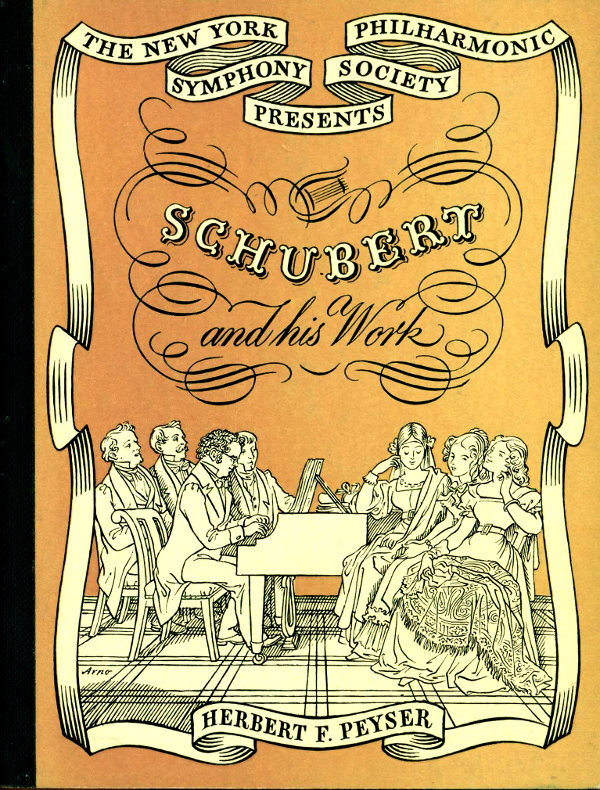
Schubert and His Work
by Herbert F. Peyser
1. The Book and Its Place in Schubert Literature
Schubert and His Work by Herbert F. Peyser is a classic English-language introduction to the life and music of Franz Schubert, written with clarity, warmth, and a strong sense of historical narrative. First published in the early twentieth century, the book belongs to a generation of musicological writing that sought to humanize composers for a cultivated but non-specialist readership.
Peyser was not an archivist or source-critic in the modern sense. He was a critic, essayist, and musical communicator, and his aim was not exhaustive documentation but understanding Schubert as an artist and a man, whose music grew directly out of his temperament, friendships, social limitations, and inner emotional life.
The book became influential precisely because it bridged biography and musical appreciation, at a time when Schubert was still widely misunderstood as a minor or purely lyrical figure.
2. Schubert the Man: Modesty, Isolation, and Inner Intensity
One of Peyser’s strongest chapters is his psychological portrait of Schubert. He emphasizes Schubert’s extreme modesty, social awkwardness, and lack of worldly ambition, contrasting sharply with the heroic image often applied to Beethoven.
Peyser presents Schubert as:
- socially dependent on friends rather than patrons
- inward-looking rather than confrontational
- emotionally intense yet outwardly restrained
Crucially, Peyser avoids romanticizing Schubert’s suffering. Poverty, illness, and neglect are acknowledged, but the emphasis falls on Schubert’s quiet resilience and continuous creative impulse, even in the face of indifference from publishers and institutions.
Schubert appears not as a tragic poseur, but as a working composer driven by inner necessity.
3. The Music: Song as the Core of Schubert’s Genius
Peyser places the Lied at the absolute center of Schubert’s achievement, treating it not as a minor genre but as the purest expression of his musical personality.
He explains with particular sensitivity how Schubert:
- transformed poetry into musical drama
- treated the piano as an equal narrative voice
- created psychological depth through harmony rather than gesture
Peyser is especially strong when discussing Schubert’s ability to enter the emotional world of a poem without theatrical exaggeration, allowing music to unfold as an inner monologue.
Rather than cataloguing songs, he focuses on why Schubert’s songs feel inevitable, emotionally truthful, and timeless.
4. Instrumental Works: Beyond the “Songful” Stereotype
An important corrective in the book is Peyser’s insistence that Schubert’s instrumental works are not merely “songs without words”. He devotes careful attention to:
- the symphonies
- the late piano sonatas
- chamber music such as the string quartets and quintet
Peyser highlights Schubert’s unique sense of time, his ability to let music breathe expansively, and his preference for harmonic exploration over motivic conflict.
He acknowledges structural weaknesses where they exist, but frames them as the by-products of a fundamentally different musical imagination, not as failures.
5. Schubert and Beethoven: A Necessary Shadow
Like many writers of his era, Peyser devotes a section to Schubert’s relationship with Beethoven—psychological, artistic, and historical. Importantly, Peyser refuses to see Schubert as a lesser Beethoven.
Instead, he argues that Schubert represents an alternative path in early Romantic music:
- inward rather than heroic
- lyrical rather than dramatic
- expansive rather than dialectical
This was a significant stance at a time when Beethoven still dominated all evaluative frameworks.
6. Style, Tone, and Lasting Value
From a modern scholarly perspective, Peyser’s book is not a source-critical or analytical reference work. Dates, manuscript issues, and stylistic chronology are treated broadly rather than rigorously.
Yet its enduring value lies in:
- its lucid prose
- its empathetic psychological insight
- its ability to make Schubert’s music feel necessary and alive
For readers approaching Schubert not as a catalog of works but as a human voice speaking through music, Peyser remains a rewarding guide.
7. Who Should Read This Book Today
This book is especially valuable for:
- general readers seeking a serious but accessible Schubert biography
- musicians wanting interpretive insight rather than analysis
- readers interested in Romantic temperament and creativity
It pairs particularly well with more modern, document-based biographies, offering the emotional and aesthetic dimension that pure scholarship often lacks.